Contextual Research
Project Development
Coursework
Reflection
Work in Progress Portfolio: Surfaces and Strategies
Oral Presentation: Surfaces and Strategies
Contextual Research
Project Development
Coursework
Reflection
Work in Progress Portfolio: Surfaces and Strategies
Oral Presentation: Surfaces and Strategies
Week One
My current practice is very much one based on selection, with the decision of which parts of the UAE to choose to represent the ideas that I wish to convey. In the last unit, I was looking for areas of the country that showed either one or a combination of traditional Emirati life and modern Emirati society. In this unit I will be looking at ideas of how different borders can be represented through aspects of the fabric of the UAE. My intent is to illuminate both visually and textually, how different ideas of society manifest themselves. I mention text here, because the context in which my work would be best suited to consume in is that of a book with text. As mentioned in the last unit, I have been very influenced by the book City of Glass by Douglas Coupland and my idea is to aim for something similar, albeit with chapters longer than a single page plus image. The work could also potentially be suited to a gallery exhibition and, as the intention is to base it entirely on the UAE, I will certainly approach the galleries that specialise in photography in Dubai and possibly the other six emirates as well.
Contextually, my work has been visually influenced enormously by those photographers producing what might loosely be termed Americana. Most of all, I love the work of Stephen Shore and Ed Ruscha – the wide open spaces and everyday details lend themselves very much to the vistas of the UAE.

http://bbc.adactio.com/photography/genius/gallery/shore.shtml

https://www.npr.org/2013/09/22/224086804/in-ed-ruschas-work-a-city-sits-for-its-portrait
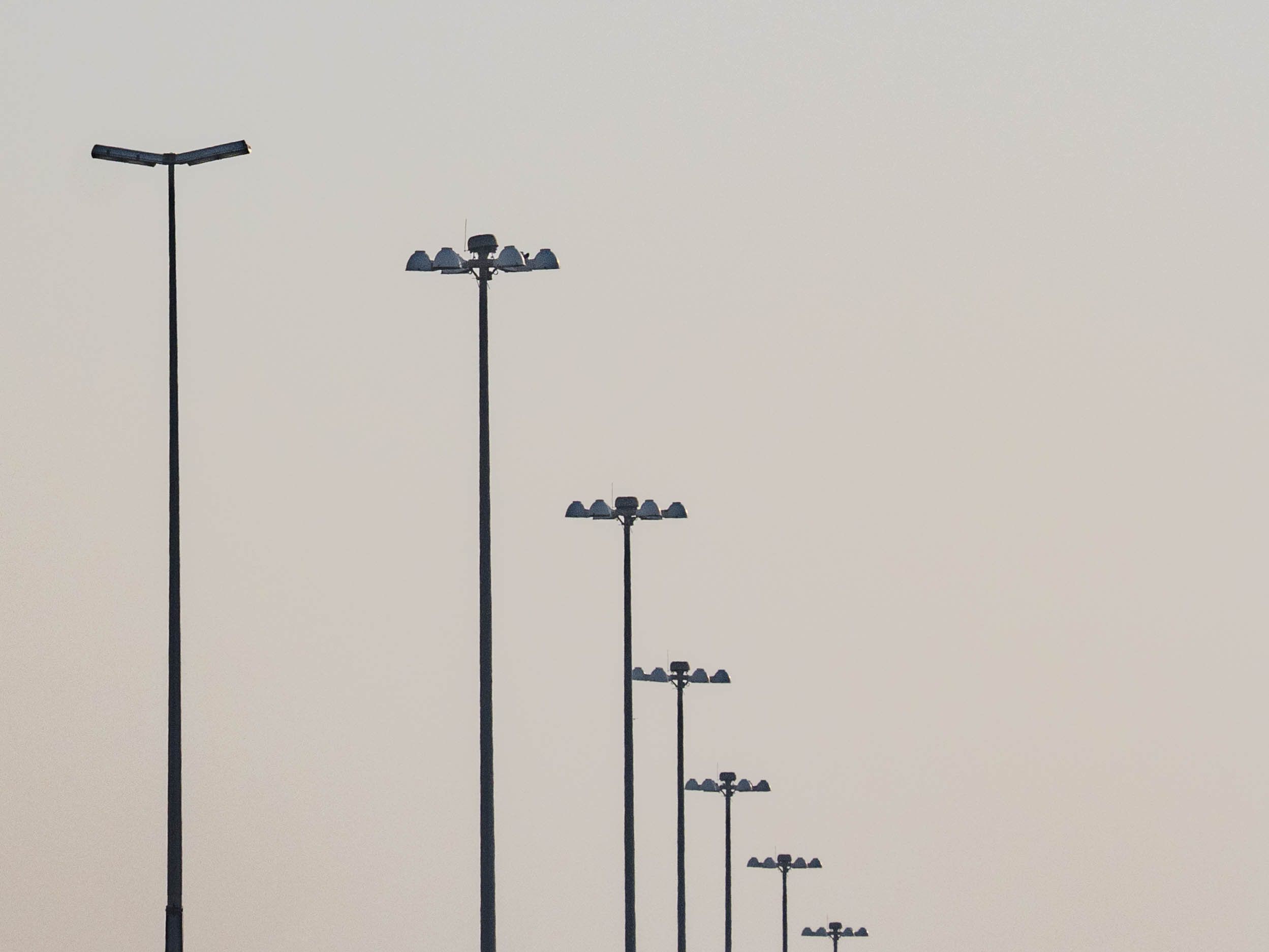
In each case, the meaning is not as immediately apparent as, say, an Ansel Adams landscape, inviting closer scrutiny and relying, to some degree, on the audience to become complicit in creating meaning. This is what I am hoping to do with pictures such as the shot of the change of streetlights, that signifies the border between Dubai and Abu Dhabi.
Week Two
My work thus far might be considered a ‘peculiar practice’ in that selection is the paramount skill in what I am trying to convey – the borders are there, either in concrete or notional form, and it is my job to select which details might signify them. Of course, selection could easily be considered a part of other artistic practices, but regarding my own ideas, it is the choice of what is extant that is the challenge – the limitations of photography as a representational (again, I am speaking purely personally here) art form create the meaning. For me, just as a sonnet would not be a sonnet if it did not follow the rules, anything beyond what might be considered basic darkroom technique in post-processing would render what I am trying to do meaningless. It is the adherence to the rules that creates the meaning. As mentioned in the contextual research section last week, it is not so much how the subject matter looks, but rather what it signifies.
This has quite an effect on how the context in which I present my work might affect how it is received. Outside of a fine art context, there may be little meaning in the photographs themselves. My intention is to combine the photographs with as yet undecided text, though the text would not necessarily directly explain the photographs. Even without text, the title or idea of borders and/or liminalities may suffice to aid understanding, though many of the shots I have taken or envisage taking may also require knowledge specific to the United Arab Emirates (see the streetlight shot from last week). Thus were the photographs to be exhibited, they may require less textual signifying were this to happen in the UAE than they might elsewhere.
This could even be seen as being in keeping with the fact that the theme of the project is the borders of the UAE…
Week Three
I am not a big fan of constructed photographs in most cases. However, I have been very much enjoying the work of Jeff Wall (all three of the photographs I have chosen are available on the link below):
https://www.brighthub.com/multimedia/photography/articles/126370.aspx#imgn_2
I think the thing that appeals to me about Wall’s work is its esoteric nature – that many of his shots by and large appear to be straightforward street photography and it is only through gaining more information (that link between a weak signifier and a strong signified again!) that we discover that, as well as whatever message we initially thought the photograph might hold, there is a further meta-message about the artificial nature of art in general and photography in particular.
I think that, to a somewhat lesser degree, this link between signifier and signified requiring further amplification is what I am aiming at in my work. However, in this particular project, I hope to combine some shots where the signifier is stronger (i.e. photographs of clearly observable, usually geographical rather than political borders) with others where the signifier is much weaker, hoping that the juxtaposition will allow the former to partially explain the latter.
Week Four
Photographic ambiguity: this is central to much of what I am trying to achieve – as I have stated elsewhere, Barthes idea of press photos having a weak signifier and strong signified as opposed to advertising photographs which have a strong signifier and strong signified is central to the way I am approaching the representation of borders in my project – which borders are obvious and which require extra knowledge to understand.
I also found the material on gendered photography useful, though at this stage more in my day job as a teacher of IBDP language and literature of which decoding the visual language of adverts is a central part.
The intent of my own to work is to get the audience to reflect on the nature of borders and, hopefully, on the massive amounts of consent that the world requires to run in the way that it does. My primary strategies for this are the careful selection of items or scenes that reflect either borders themselves or the potentially ambiguous nature of the liminal space thereabouts: are there any visual clues or cues to signify that this is either a border or a liminal space. It is hard for me to tell at this stage whether or not this is successful: I am deliberately using ambiguity so I am unsure as to whether or not an accompanying (parasitic?) text would be necessary to understand, or whether knowledge of the title of the project would suffice to engage the audience’s curiosity as to what exactly makes this a photograph of a border or a liminal space.
I also intend to use the sequence in which I present the photographs as a strategy to help understanding – the more obvious, strong signifiers of borders at the start getting progressively weaker as the sequence progresses.
Week Five
Most of my photography falls into the realm of travel photography. Thus, my own gaze is voyeuristic and political (I am taking photographs, more often than not, of what I consider ‘other’ – and as a white, middle-class, western male, that is from a position near the very top of the privilege scale). I have, in the past, taken quite a few travel portraits, though I am increasingly uncomfortable with the political aspects of this – why do I feel the need to photograph these people? Is it just because their lives are different from mine? Why do I rarely photograph people from my own background? Increasingly I am moving towards making pictorial representations of a culture or a place purely through observed details. Though I don’t know if this is any better from apolitical standpoint. I find this very much in line with what this week’s second presentation was saying about the depiction of differently abled people in advertising – by the mere fact of taking the photograph in the first place, we are highlighting the differences between ourselves and the subjects, and thus turning them into ‘the other’.
Currently, as mentioned in this week’s first presentation, I try and avoid having people in my photographs – at least for this particular project. When people are present, they are definitely subordinate to the landscape or environment.
Week Six
I rarely take any what might be considered personal photographs. I really only use my cameras as a way of exploring – either familiarising myself with somewhere new or defamiliarising myself with my usual environs. I find that since the rise of social media a) I don’t need photographic representations of friends and family as there are many readily available and b) my photographs have an immediate intended audience in both Instagram and Photocrowd. My practice is almost entirely digital – I do have several film cameras but that seems to be more because I like the idea than the practice – I very, very rarely use them. The only time in recent years I have used analogue photography was to create an album for my sister of all the places that were important to us growing up. I chose to do this using an instant camera as I felt that the fact that each photograph was therefore unique might add to the special, personal nature of the gift – as Benjamin points out that value can be thought of in terms of originality (and scarcity).
As much of my photography is travel photography, there is always the temptation to produce the same tourist shots as everyone else, and I have, in the past done so.


And I am still far from immune to the lure of the karaoke photograph, as I call them. Though now it is a diversion from photographing a new place, rather than the main purpose. I don’t think it is possible to be entirely original; in the same way that nearly all stories or chord-changes or even melodies have been used before. However, it is possible to see the unoriginal through an original eye – as in writing, looking for the ‘telling detail’.
And also, it turns out, that my attempt at an original take on the Mona Lisa is also a copy of Guia Besana’s shot used in the presentation. Though this raises the point that I took this photograph in 2015, a year before Besana…
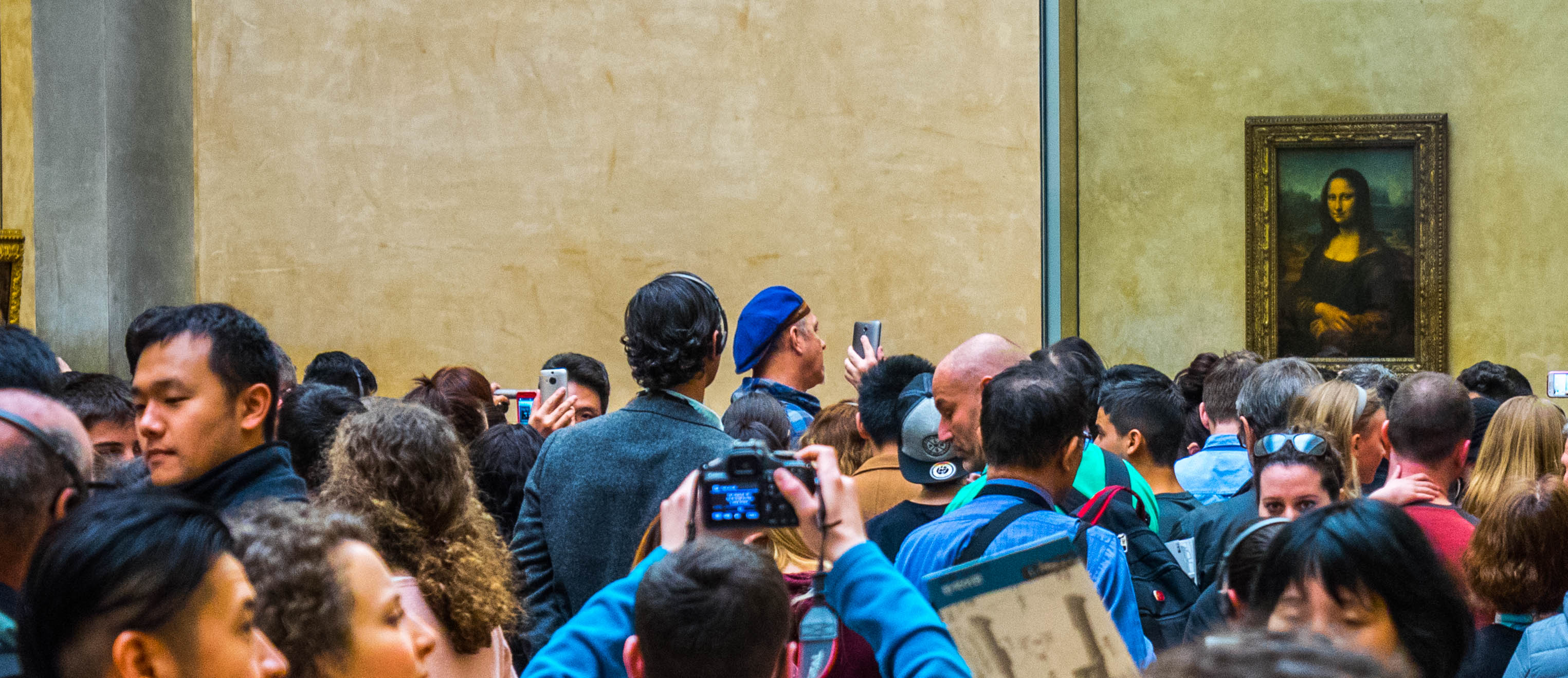
It has long fascinated me as to why people take photographs of paintings, particularly as much better reproductions are available for a handful of change from postcard stands. Presumable, the same thing that impels people to record concerts on their phones – proof that they were there?
The idea of owning reproductions of famous images or of images of famous scenes has given me an idea, linked with the ideas raised by psychogeography in previous units, for a mini-project – of pictures taken of the location of famous monuments corresponding points on a map of my local area – one for next unit perhaps (though more like a mini-project as I can’t imagine that anything more than a few of these photographs would sustain the viewers’ interest). This could also be extended to producing mugs and mousemats etc.
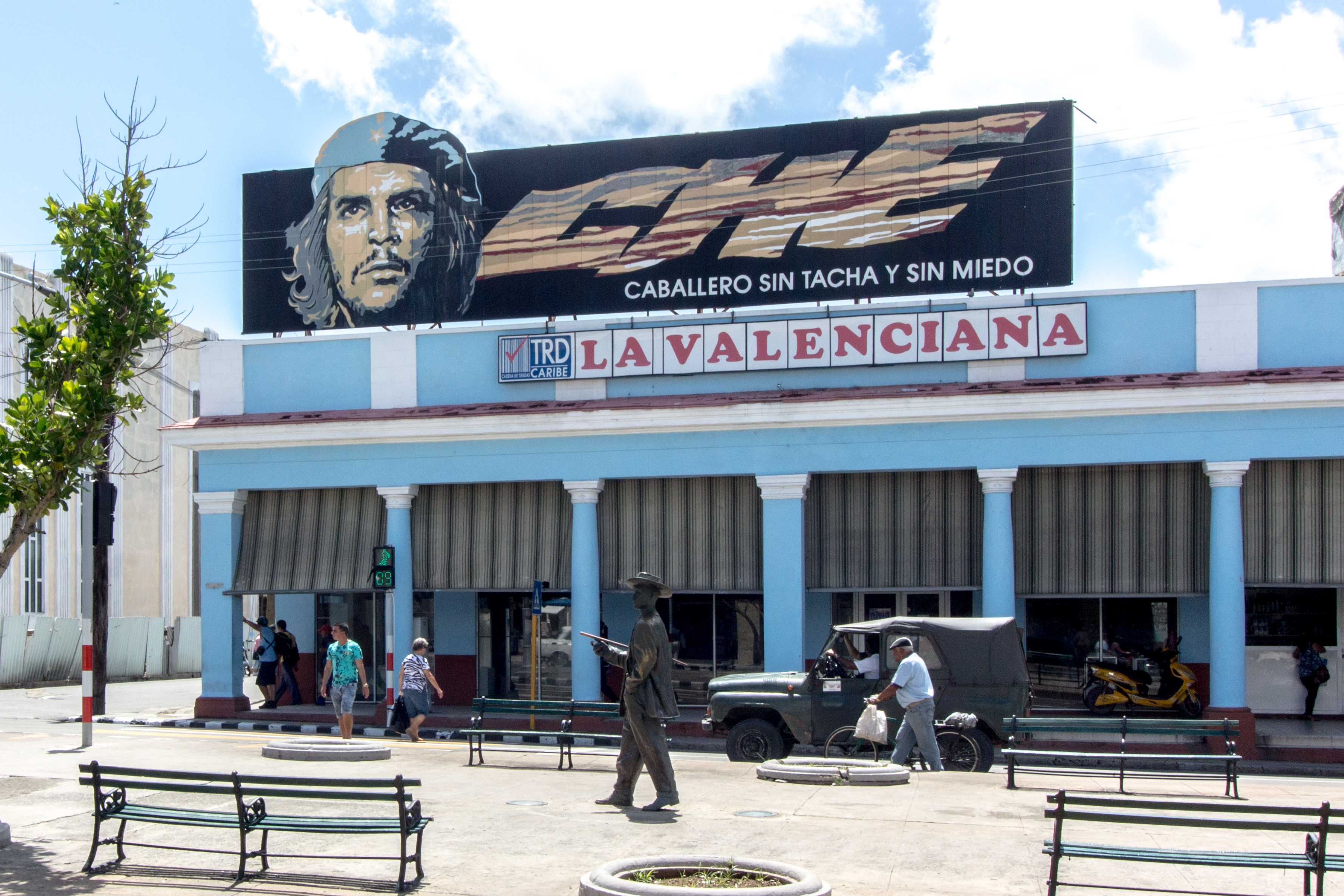
The use of the famous image of Che Guevara reminded me of last summer’s trip to Cuba, where this image is just about everywhere, having gone beyond iconic status to almost becoming part of the wallpaper – so ubiquitous that they are barely actually seen any more – are there any other photographs so common that they no longer have any impact?



The article Decoding National Geographic really spoke to me, echoing much of what I was trying to articulate last week about my own practice of travel photography, particularly of taking travel portraits. I think there is a difficult line to walk here – whilst NatGeo’s travel portraiture is rarely less than spectacular, and in my own case, I have several images with which I am pleased, how far is it acceptable to hold people up for scrutiny largely based on the fact that they look different from us and our implied audience?
Week Seven
Given that I am attempting to follow the precepts of deadpan photography, I try not to have too explicit a message in my photography; specifically in my photography for this particular project. If there is a message, then it is an implicit, suggested one that borders are often artificial, and any link made to how this might be seen in terms of either the environment (the border between Haiti and the Dominican Republic for example) or human suffering (the borders, be they physical (the Mediterranean), notional (national borders) or, increasingly, notional made physical (barbed wire fences along national borders) that refugees have to cross in search of safety, are left for the audience to infer themselves.
Whilst I do agree that the beauty of Salgado’s images may detract from the seriousness of their message, I also think that this beauty works as a strategy to make us stop and look – the dissonance between the signifier of the physical beauty of the image and the horror of the subject matter encourages engagement, whereas, as has been pointed out in the presentations this week, images of horror and deprivation have become so common that we might otherwise pass them by.
Week Eight
Critical contextualisation of practice: I think that the work this module has really helped my understand what I am trying to do with my project, and with my practice in general. Prior to this unit, I had a handful of photographers whose work I admired and a vague idea of the aesthetic I have been chasing. through developing an understanding of the history of the American photograph (particularly the work of Ed Ruscha and Stephen Shore) and my consequent reading about the deadpan style/school of photography, I have been able to theoretically as well as practically link the aesthetic I was chasing to the subject matter I want to explore. I have moved much more away from more traditional travel photography. The reading about Barthes’ ideas of the link between signifier and signified in photography has also given me a good idea of how my work should be sequenced and which of the photographs I have taken best espouse what it is that I am trying to achieve.
Professional location of practice: I feel that this area still requires some development – beyond the vague idea of a book with different different chapters combining text and photographs looking at different aspects of life in the UAE, I am not sure where else my practice might be viably located. This is something I intend to explore further, particularly when I am back in the UK over the summer and have much greater access to a wider range of books.
Critical analysis: I think this is an aspect of my understanding of photography that has also developed over the course of this unit, though also one which is developing still. Through analysing what I like in other people’s photographs I have been better able to define what I would like to develop in my own. Many of the photographs from earlier in the unit, that I thought would be definite inclusions in the final project, I have now chosen to leave out.
Written and oral communication skills: I think this is an area, given the fact that I have been teaching English for two decades, in which I am traditionally strong. However, developing the subject-specific (and often therefore esoteric) language has been a challenge. Despite the fact that my undergraduate degree was a combination of philosophy and English, I have struggled (as always!) with the more abstract, philosophical content of this unit and am constantly worried that I might be using terminology slightly incorrectly (or even just not quite precisely enough). I think this will develop with continued exposure to the writers and thinkers we have been looking at, and to the writers and thinkers suggested thereof.
Week One
My overall direction is towards a book about the UAE that fuses photography and the written word, along the likes of City of Glass by Douglas Coupland and Bill Brandt’s The Land. The idea is for each module to spent looking at one aspect – one chapter. Last module I focused on the fusion of tradition and modernity in the UAE. I have several avenues I wish to explore now I am back in Dubai (having spent much of the break traveling), and at the moment I am trying to decide between a psychogeographical tourist approach or, and this is the more likely one, an exploration of liminality in the UAE – a look at borders both political (between emirates and with other countries), geographical (shoreline and where the mountains meet the desert), cultural (East meets West) and sociological (different areas and styles of living, exploring where mankind stops and the desert begins). As I have had a very busy start to the term (Ofsted style inspection as soon as we returned…) I have only managed the one border thus far – a look at the border between Dubai and Abu Dhabi – a border which resulted in armed warfare between the two emirates as recently as the late 1940s but which is now only visible as the streetlights change shape.
And a look at the liminality of sea and land, particularly here in view of the heavy sea-fogs we often get in winter.

In terms of the ideas presented this week, I personally would say that frame is the most important to my work so far, particularly as I have been looking to present the idea of the juxtaposition of traditional and modern int he UAE. Thus, although there are a great many examples of each, it is when I can frame both together that the juxtaposition becomes most defined, such as this shot of a traditional Emirati date farm in the shadow of the Burj Al Arab hotel:
I use other aspects to enhance the visual impact of photographs though they may not be essential to the actual meaning. For example, I used the idea of depth to make this shot of a traditional salwar wearing labourer with his old-fashioned bicycle crossing an ultra-modern footbridge:
And time was important for the visual impact of photos from the tradiotional Fujairan sport of bullfighting (the bulls fight each other and aren’t harmed), but not essential to their meaning:
As much of my practice lies in the travel photography sphere, I would also argue that context or background is important. Whilst traveling, I primarily look for either what is the same in a new place or what is different. This, of course, relies on a starting point for measuring similarity and difference. As a white, middle-class, British male, what I find to be interesting depends entirely on that context. When I am photographing the UAE, I choose subjects that an Emirati might find extremely commonplace and lacking in interest. Then, also of course, there is the context of the viewer. Travel photography now has an instant, international audience. It’s not like having a slide-show for the neighbours when you get back from Torremolinos any more… Flippancy aside though, cultural sensitivity and an unwillingness to view people as tourist attractions are much more of a consideration for a travel photographer as they might have been in a pre-digital, pre-social media time.
Week Two
Regarding truth vs authenticity: as a literature teacher, I naturally prefer fiction to non-fiction and find in it a higher sort of truth (although good non-fiction also taps into the universal of course). And yet in my photographic context (primarily travel and documentary) I am personally averse to more than minimal manipulation of an image. I suppose it depends on context and expectations – A Million Little Pieces was originally marketed as non-fiction until James Frey admitted it wasn’t entirely a memoir. Should that matter? To some people it did and to other it did not; is this the same as Capa’s falling soldier?
I would agree that artifice is unavoidable, even with documentary photography. As we saw last week, the photograph may be an indexical representation, but the choice of what to include in the frame is an artificial decision, and one made on the basis of what the message the photographer wishes to convey. As a journalist you write to create empathy for one person/group, and the same goes for photojournalism. Intentions are key – are you focusing on the crying faces of refugees to encourage empathy or on the sheer numbers to instill fear?
Week 3
Week 4
This is a shot of a coffee shop in Baku, Azerbaijan taken on Valentines Day and the red objects are heart-shaped balloons – the thing I was trying to convey was the feeling of being outside looking in, both culturally (I didn’t know even one other person in the whole country) and emotionally (I am ambivalent towards the concept of romance) and yet I still harbour a desire to be included.
The responses from my peers were varied with one reading coming very close. Semiotically, the heart-shaped balloons are a clear signifier of romance (at least in our Western world) and I hoped that the reflections on the window would suggest the idea of being outside looking in. Further, but less obvious symbolism was the fact that the coffee shop appears empty and that I, as the photographer, am not reflected in the window (though perhaps the idea of being outside looking in might have been clearer had my reflection been visible).
My own reflections on my peers’photographs was incredibly informative, particularly in making me realise what a broad palette of cultural signs exist for me – from nature doscumentaries (which I never watch yet seem to have seen enough of to understand the conventions) to the social and political history of South Yorkshire.
Week Five
My gaze is indubitably voyeuristic and inescapably political – I walk around different cities, countries, and photograph what seems to me (a white, middle-class, British male) to be worthy of seeing – implicitly commenting on what I find to be ‘the other’ or what I find relatable, such as this shot of a family walking along the corniche in Baku, Azerbaijan from my visit there last week.
Week Six
Week Seven
I personally find that photographs from outside the professional realm (and this is a broad generalisation) provoke more of a response in me than most shots from documentary photographers. Perhaps this is partly to do with a greater degree of exposure to ‘famous’ shots of tragedy – I still think that Eddie Adams’ photograph of the execution of the Viet Cong prisoner and Nic Ut’s ‘Napalm Girl’ photograph are astonishing, but familiarity has removed the initial response of shock. Furthermore, the more we learn about some photographers’ process, the more inured we may become (I am thinking here of Capa’s Falling Soldier). However, for me the photograph used in the video taken by an evacuee of the Twin Towers of a firefighter climbing to his almost certain death is more powerful still – it allows more for compassion as it directly reveals the experience of being there. The shot is not artfully framed and the expression on the firefighter’s face is human and natural.
A few of years ago, I visited Rwanda. The most shocked and moved I have ever been by photographs was in the ‘hall of children’ in the genocide museum in Kigali. I was too shocked to take photographs myself, though I wish I had, however wrong it felt at the time, just for the possibility of transmitting what was there beyond the walls of the museum. I have found a representative photograph online (below). Much like the everyday Iraqi photographs in the video, these were comparatively artless portraits with minimal text.
http://www.asherworldturns.com/rwanda-genocide-museum/
And there were hundreds upon hundreds of them.
Much as I love the visual aspect of Salgadao’s work, this, for me, is a million times more powerful. Powerful enough that the images have yet to fade from my psyche (though there has been no overexposure, I suppose)
Week One:
Having decided on an exploration of liminality in the UAE – a look at borders both political (between emirates and with other countries), geographical (shoreline and where the mountains meet the desert), cultural (East meets West) and sociological (different areas and styles of living, exploring where mankind stops and the desert begins), I managed to take a trip down to the border between Dubai and Abu Dhabi. This is interesting in that there was an actual war between the two emirates in the late 1940s over border territories and now the only way to tell that you have crossed the border is that the streetlights on the Sheikh Zayed Road (the main road connecting 6 of the 7 emirates) change shape.
Another possible border would be the fact that Dubai is a coastal city, extending along a strip of land between the desert and the sea. This leads, particularly at this time of year, to dense sea fogs. I’m not altogether convinced by this being a ‘border’ as such, but it certainly suggests liminality, which may be another refinement of the central concept.
Week Two:
A busy week at work, but managed to get into the Mall of the Emirates to look for ideas of cultural borders. I don’t think that the fact that the mall has a ski-slope and penguins in the middle of the desert could count as a border, but it is right on my doorstep if I do decide to look at that.
The only cultural border that was immediately visible was in, appropriately enough, Borders, the bookshop, where the magazine rack has a clear delineation between Arabic and English-language magazines, even though many of the magazines are themselves the same.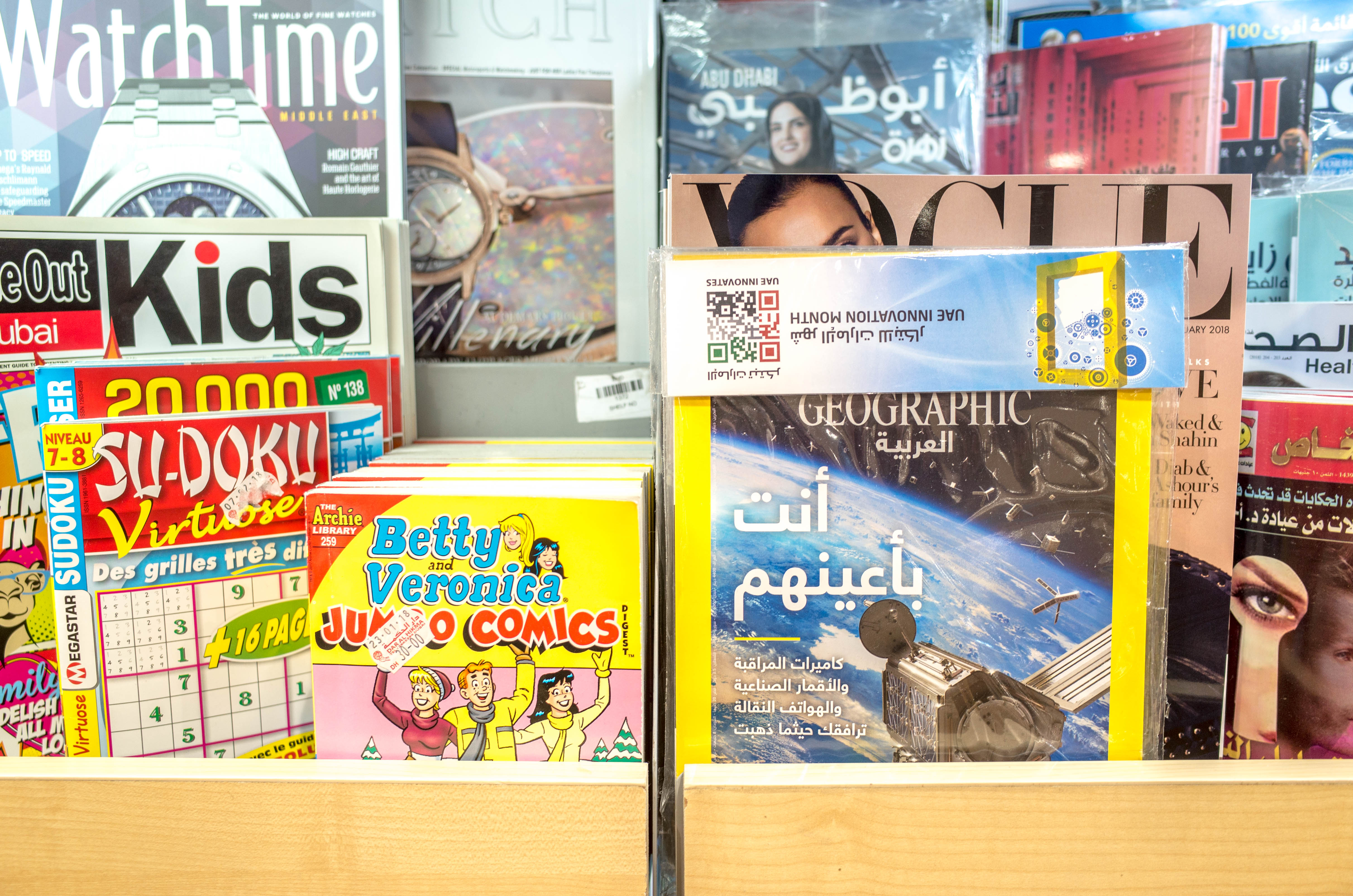
Week Three:
International Day at school gave me plenty of possibilities for looking at how different cultures co-exist in the UAE as it celebrated the many different nationalities that make up the international school in which I work. 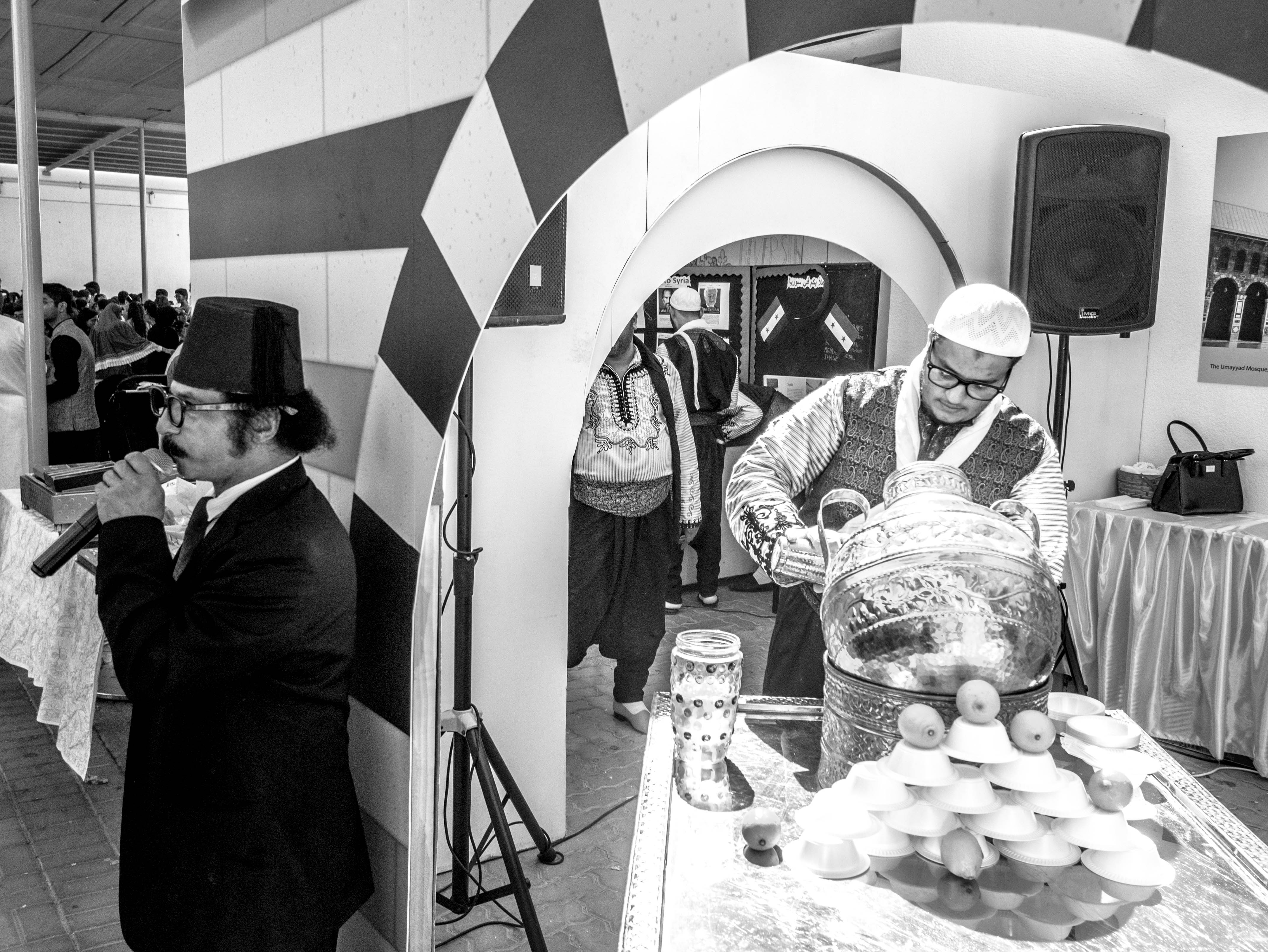
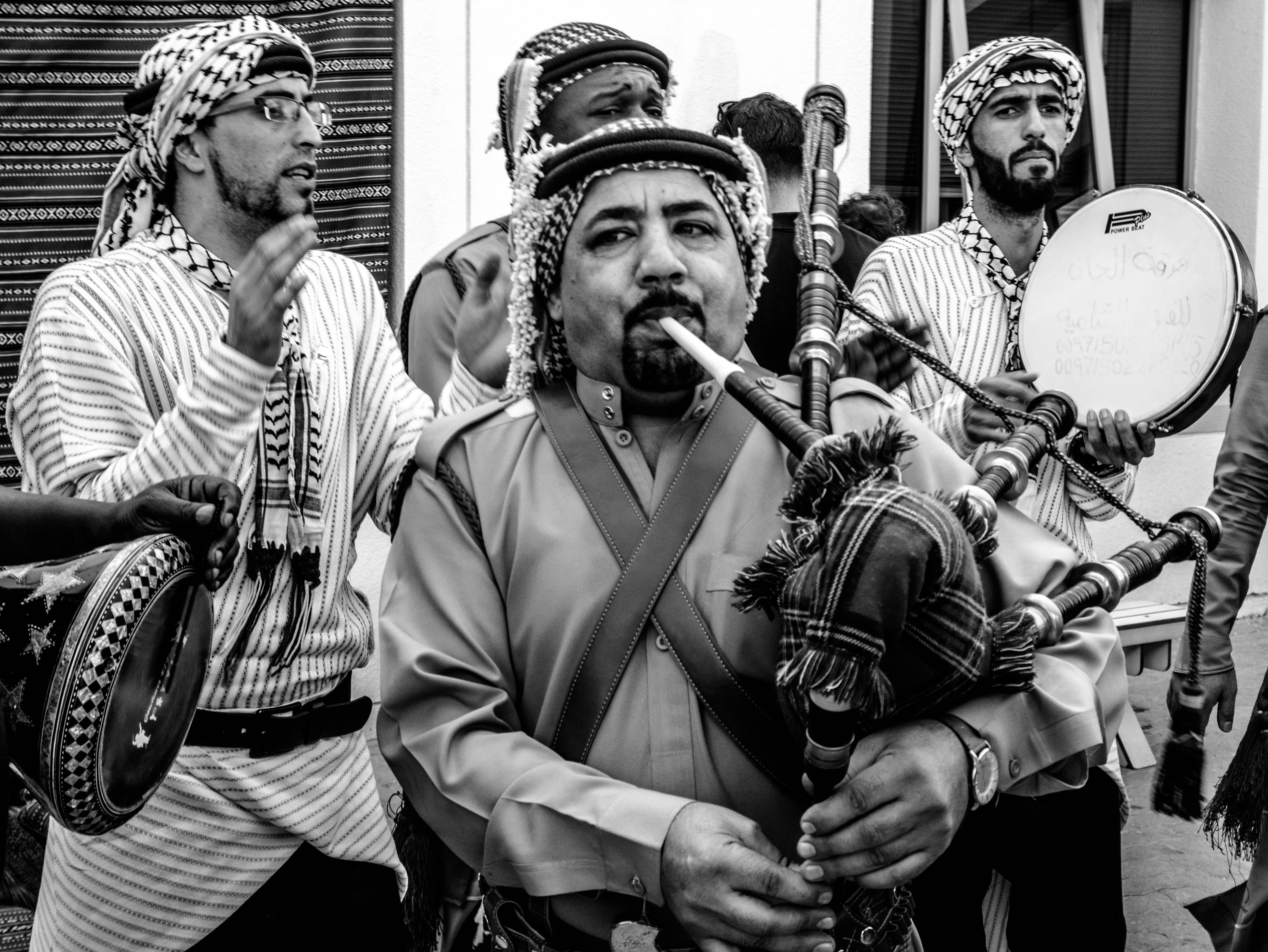 Though I’m happy with several of the shots I got there, I am still not persuaded that they will form a coherent part of what I am trying to do. They have people in them, for a start. But it is good to have the possibility should the project go in that direction.
Week Four:
A trip to Azerbaijan meant I could have a look at how borders might be represented in Dubai Airport. Although I got many good shots in Baku, with the project being UAE based, I am only here concerned with those taken at the airport. I really like this shot, showing the idea that something as theoretically mighty as a national border, one that requires much paperwork to pass, is entirely notional – not much more in actuality than a few stickers on the floor and a booth made of MDF. The only problem here is that I honestly cannot remember which end of the trip that I took this photograph – it may possibly be in Azerbaijan…
Two shots that I did get in Azerbaijan that it may be possible to replicate in the UAE show the idea of the border between inside and outside – the shot of a Baku coffee shop through the window on Valentine’s Day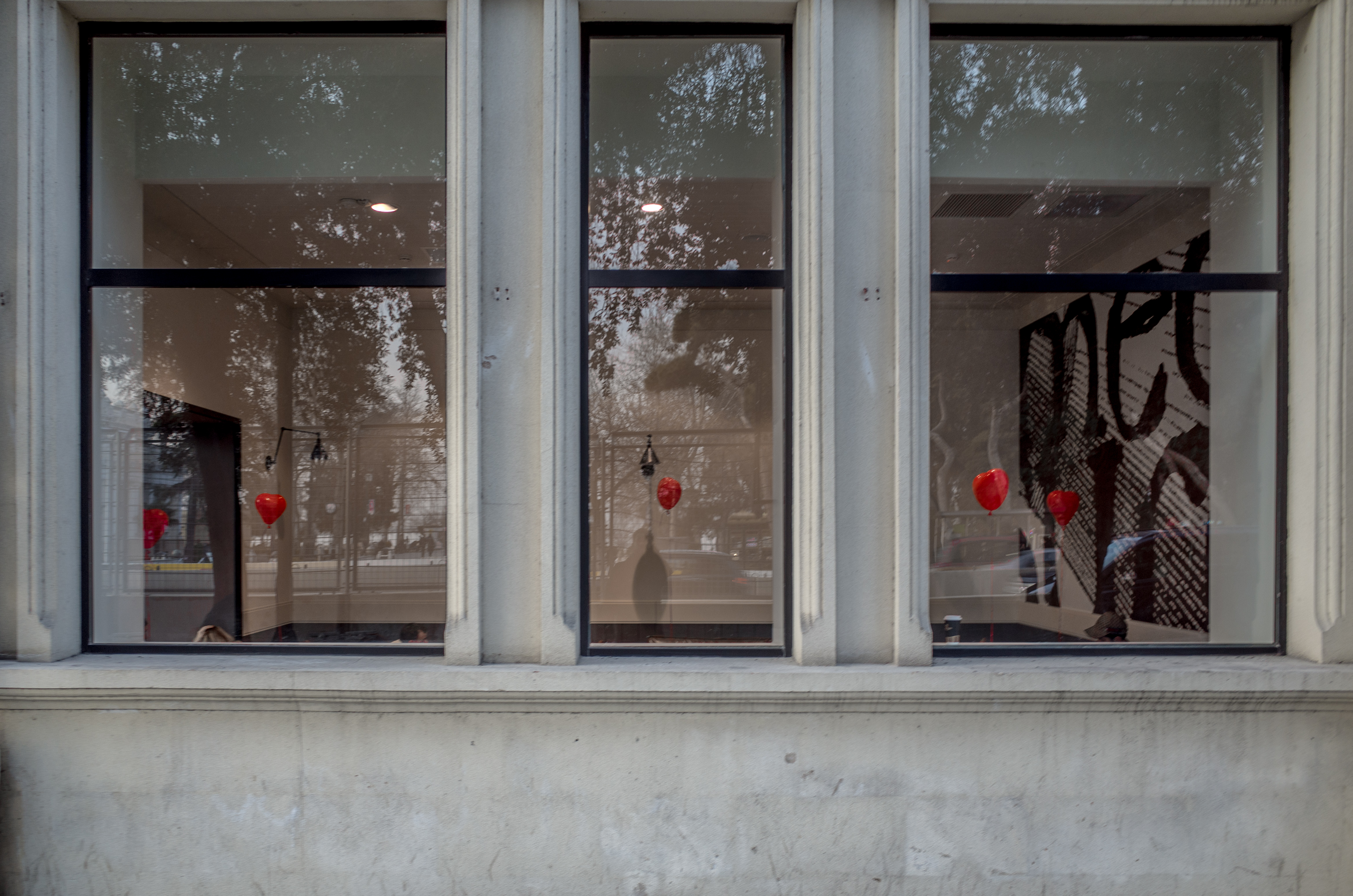
And another that shows how people flock to borders – in this case the corniche in Baku, but that may be worth investigating in Kite Beach or La Mer in Dubai, the corniche in Abu Dhabi or at any of the inland desert adventure parks on the other side.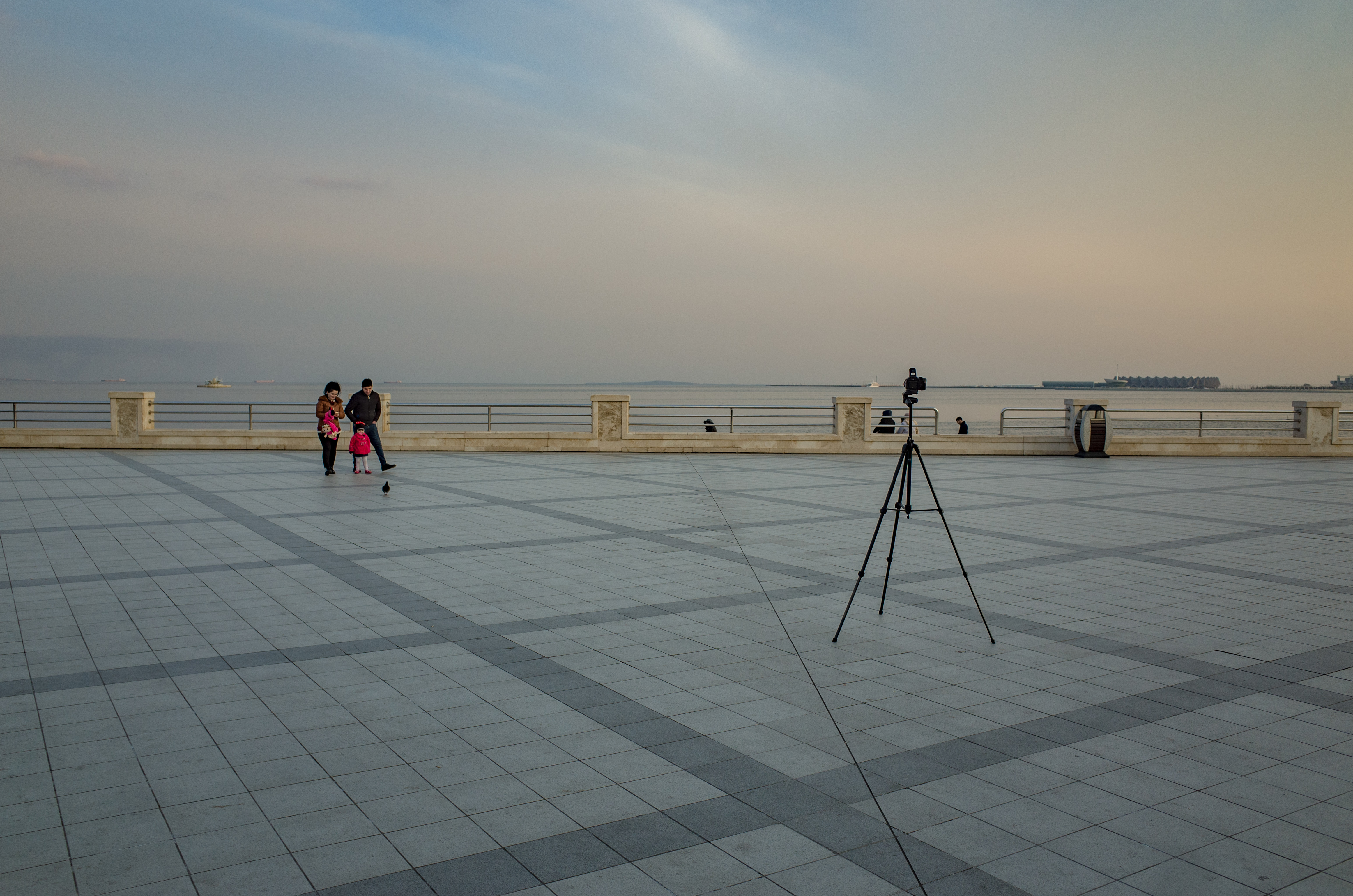
Week Five:
A trip to Discovery Gardens and inland from there yielded a few shots of the liminal area between the end of the city and the start of the desert where Dubai keeps all of its infrastructure – industry, desalination plants, power stations etc. There is a clear visual divide between the glossy skyscrapers that most people picture when they imagine Dubai and the messy business of keeping them all running.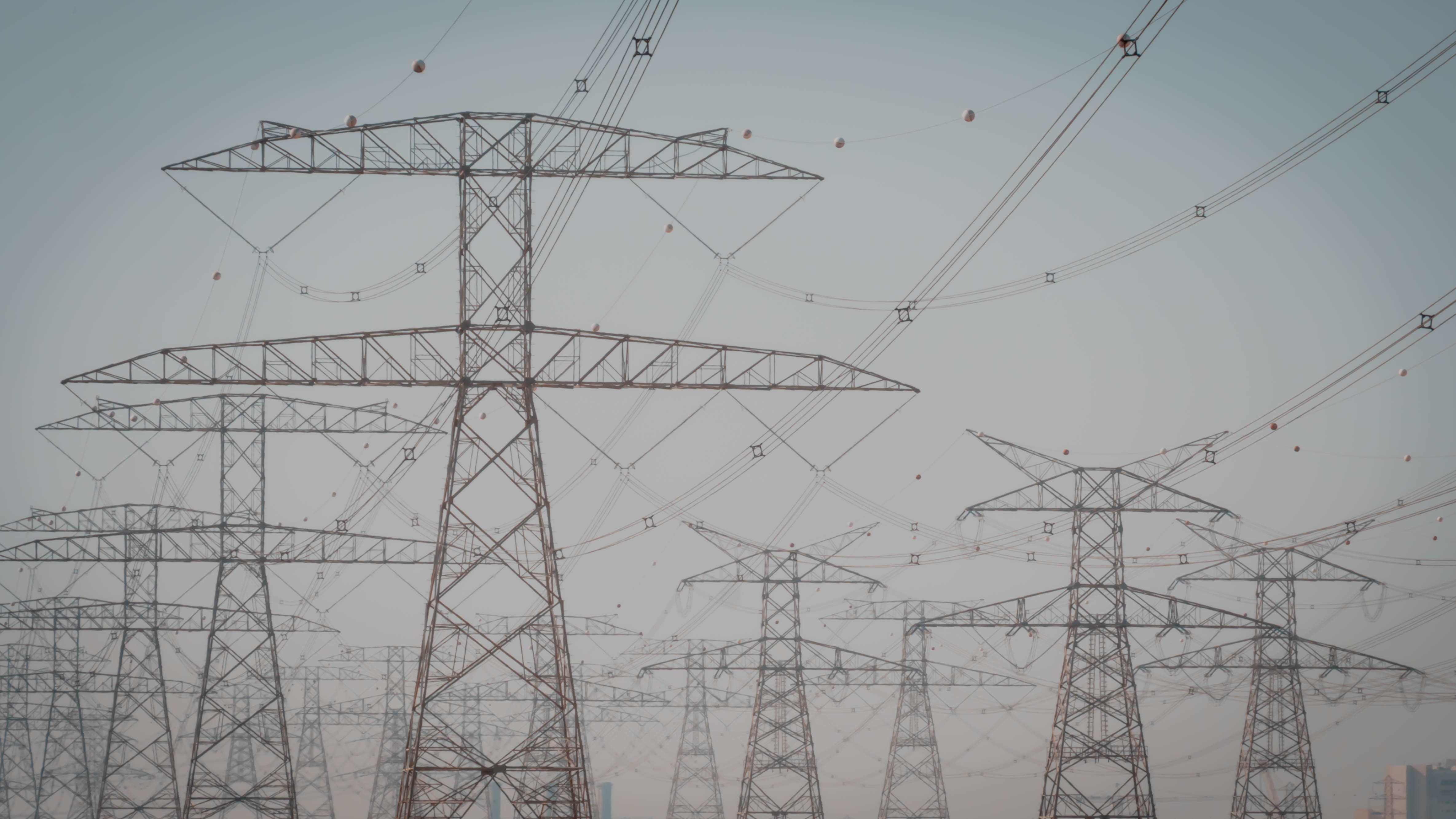

 Again, this seems to lend itself more to the idea of liminality than borders, or perhaps that is purely semantic.
I also managed a trip down to Jumeirah Public Beach after school to have a look at how that could represent a physical/geographical border, and found that the beach was divided into different zones – giving borders both geographical and man-made.
Even better, I found that there is a divide on the beach between the public beach and the VIP beach attached to the Burj Al Arab hotel.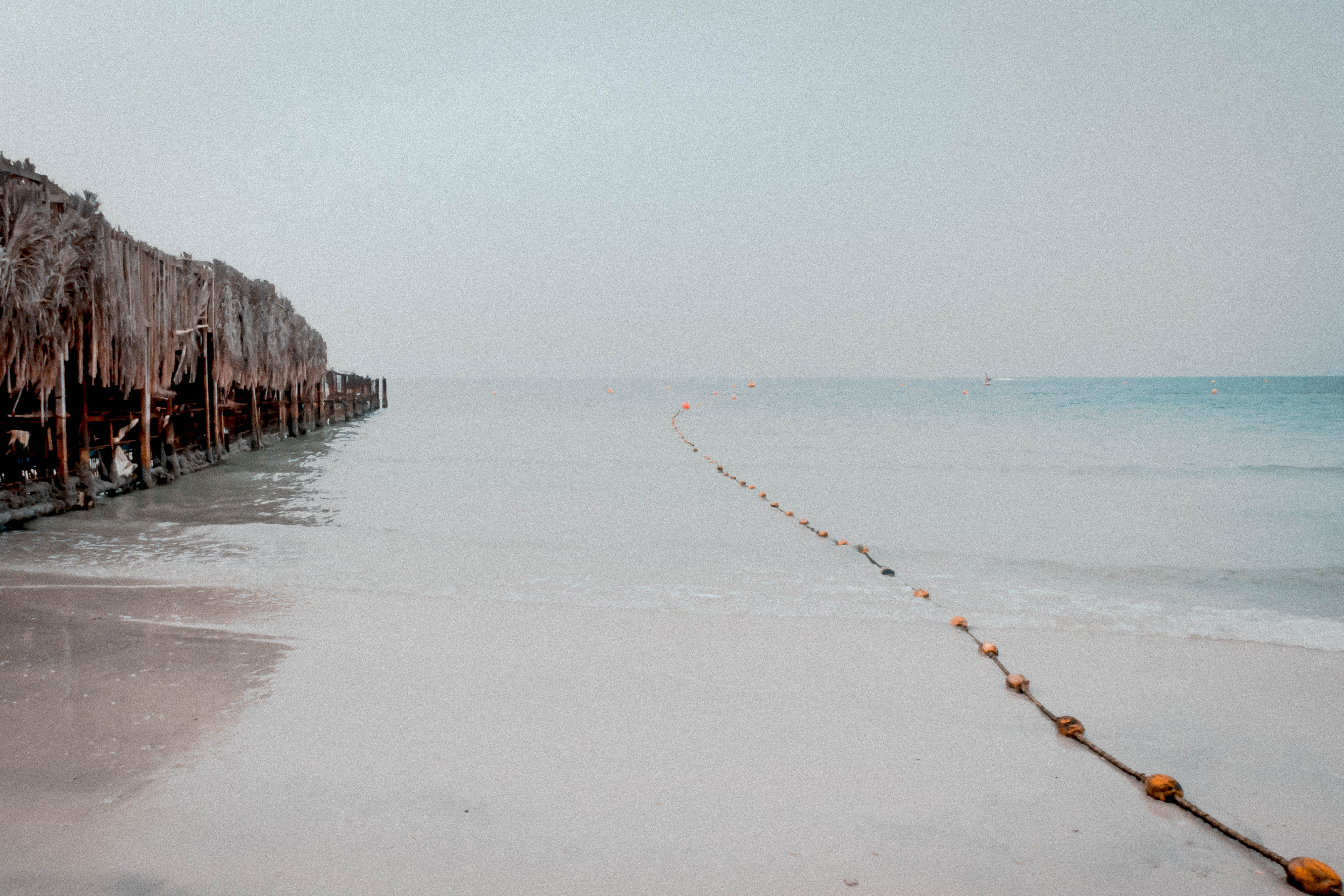 I particularly like the abstract nature of this latter shot, as well as the composition. And, as Michelle pointed out, the reflections in the sand work well with the reflections in the tiles on the previous airport border shot.
Week Six:
A massive weekend of photography! I drove ten hours and 600km to visit, among other places, the border between the UAE and Oman and the Tropic of Cancer. I have many shots with which I am happy, though I know I need to whittle them down or will otherwise end up with too many shots of fences running through the desert.
I got several shots of the camel fence that runs alongside the road separating the part of the desert tamed by mankind from the Rub’ Al Khali – the Empty Quarter – the desert that encompasses much of the Arabian Peninsula, this one being my favourite.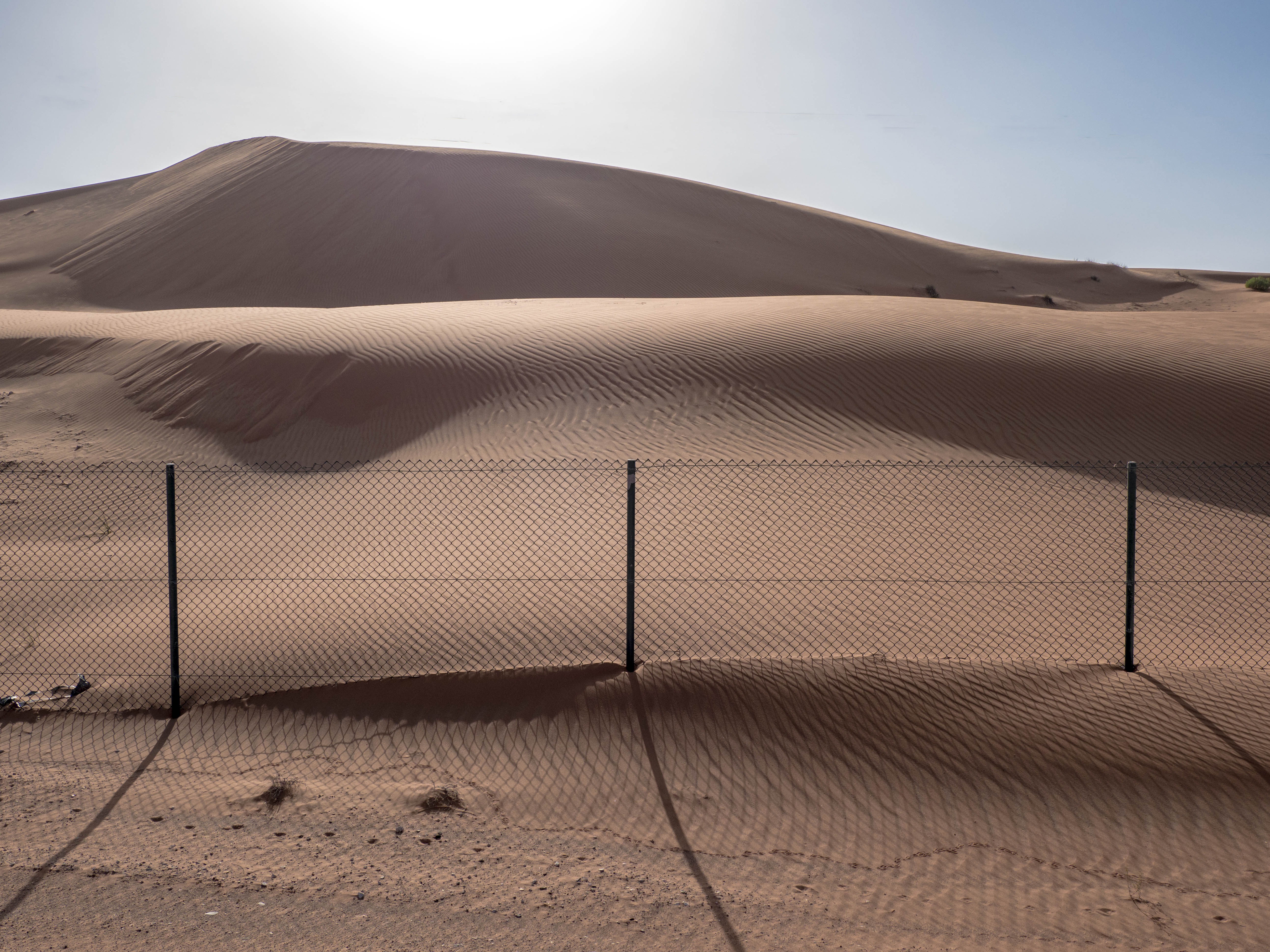
I also found several areas where human settlements suddenly stop to make way for geographical borders, be they deserts: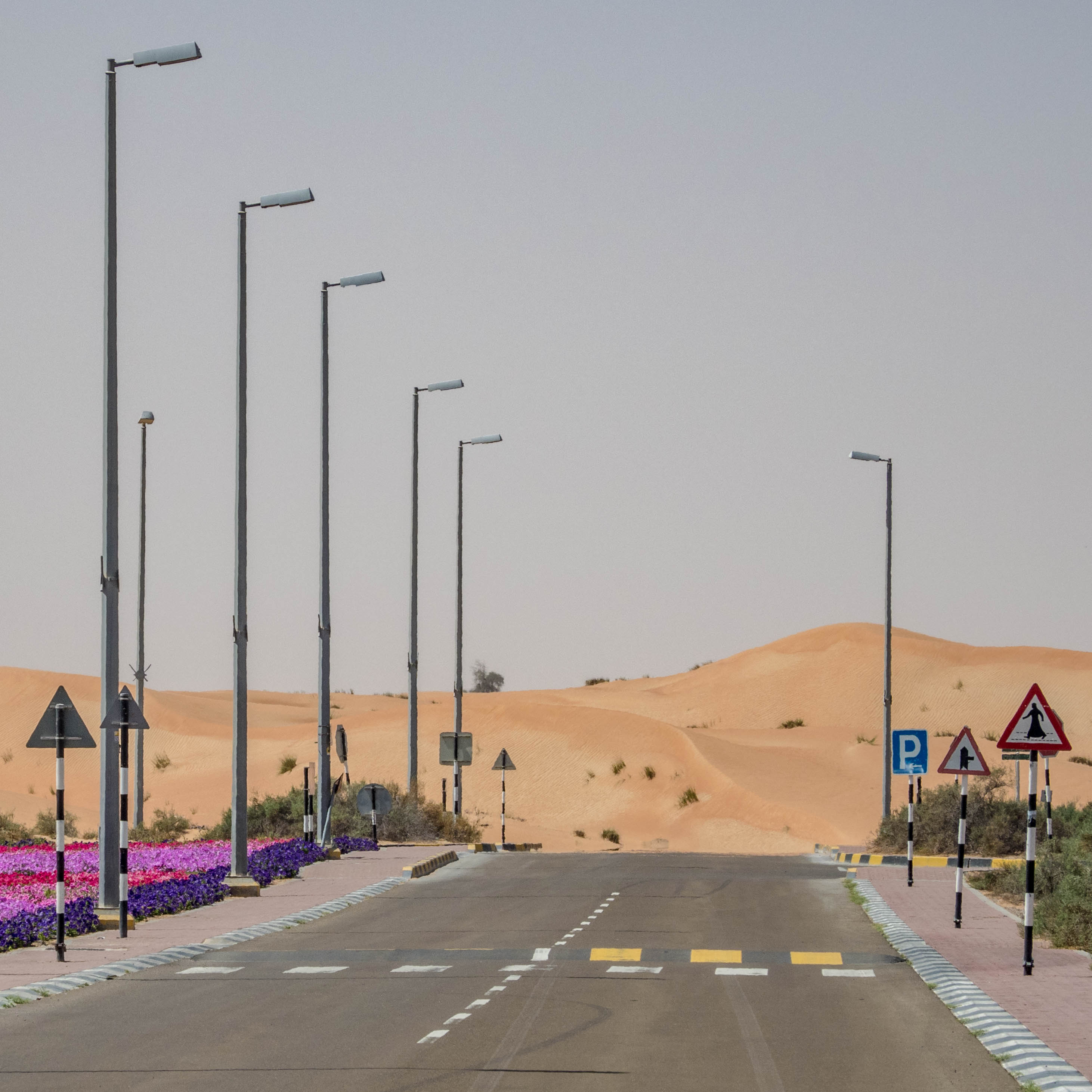
Or mountains: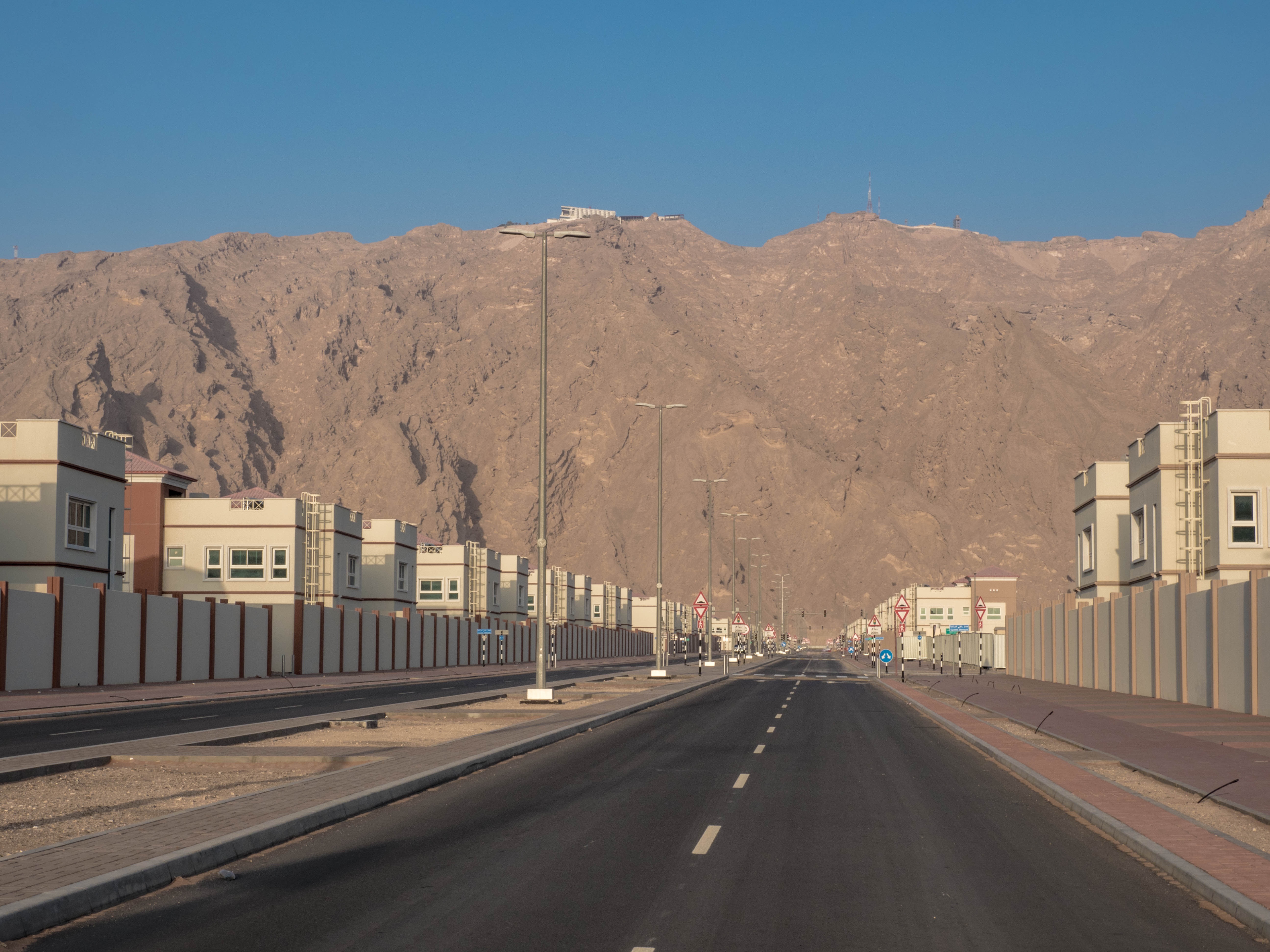
The border between Oman and the UAE runs for many hundreds of kilometers through the desert. In some places, there are farms and other settlements on the green, irrigated Emirati side which are a stark contrast to arid desert on the other. This contrast, however, proved impossible to photograph without a drone. And although I did have a drone with me, taking photographs of a border fence with another country didn’t seem like a particularly good idea…
However, there were many areas where the fence ran through otherwise featureless desert, which, for me, made an even better point – this is a notional (political) border, made physical by the addition of a fence, but it is clear that there is no difference between what lies on each side.
There doesn’t seem much to separate here.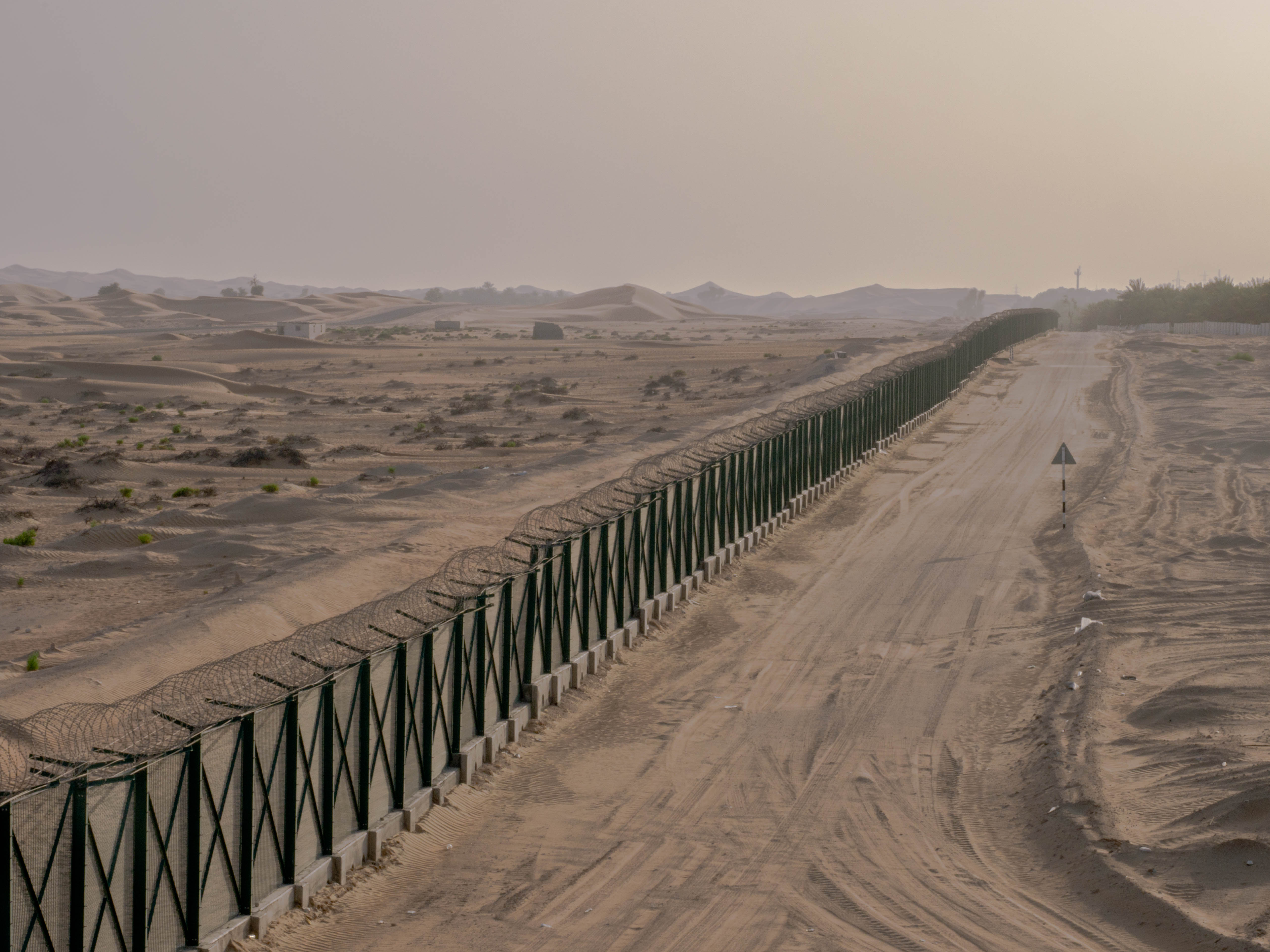
The last shot was taken from the ramparts of a small fortress, presumably built since the border was established properly in 1999. The fence itself was started in 2002. There is precious little information available about how much of the border is actually fenced (I drove over 100km and it was unbroken) or about the fort. I couldn’t even find the name of the thing!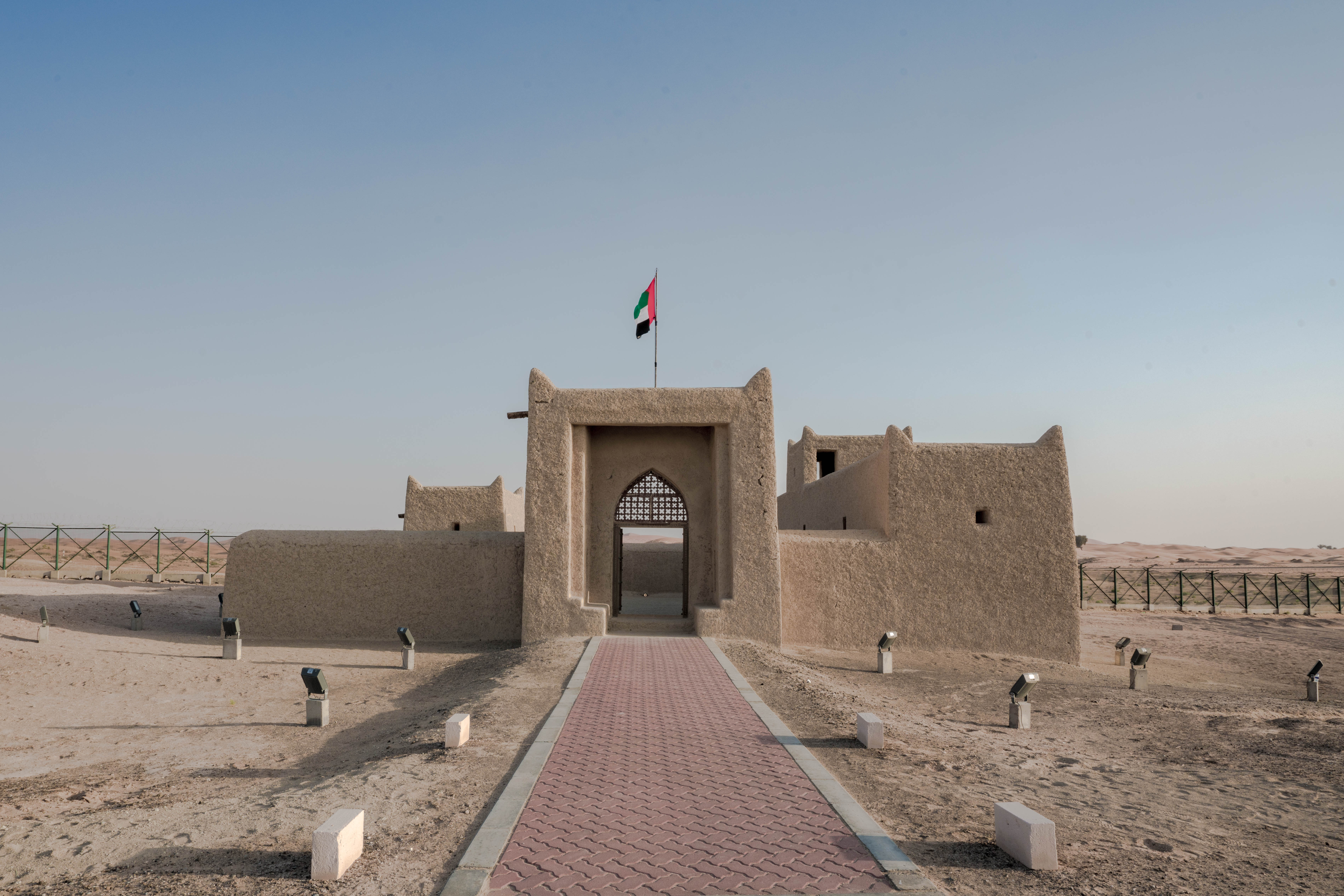
The final border I found was the main reason for the trip – the Tropic of Cancer. Not having much of a background in geography, I have to presume that this would represent a notional, mathematical (?) border.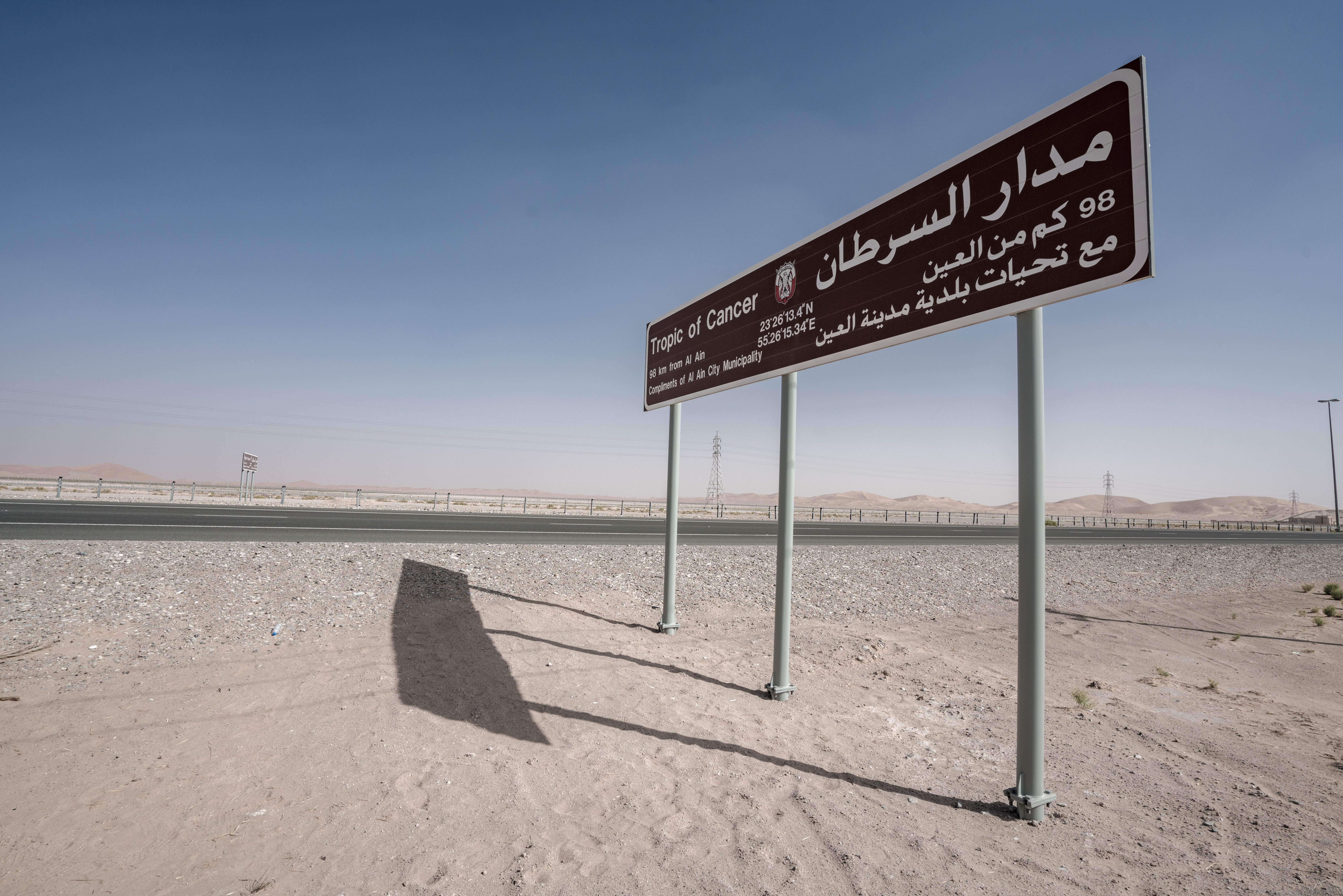
Week Seven:
A trip to the border with Sharjah this week. Another line between emirates, another war, this time fought in the 1930s. In this case, so the story goes, Dubai and Sharjah had antiquated weapons and a limited amount of ammunition, so one side would fire a cannon salvo at the other, who would then collect the cannonballs and fire them back. Furthermore, at that time, the area was used for the Imperial Airways (the embryonic British Airways) clipper from the UK to Australia. Dubai Creek was the only sheltered strip of water where the flying boat could touch down and Sharjah Fort was the only place the passengers could refuel whilst the plane was doing the same. Consequently, the war, as it was, stopped for a couple of hours every afternoon, and resumed when the Short Empire had safely departed. How much of this story is true, I don’t know, but I like it anyway.
My visit to the border coincided with a triathlon that had closed off most of the roads. However, I managed to find many examples of the border, though none with signs. The Dubai-Sharjah border is notorious for terrible traffic as there are only a few roads that actually link up between the two emirates. Consequently, there are several places where two roads run side by side with iron pillars between them and no way for vehicles (even the Toyota Landcruisers and Mercedes G-Wagens much beloved out here) to cross.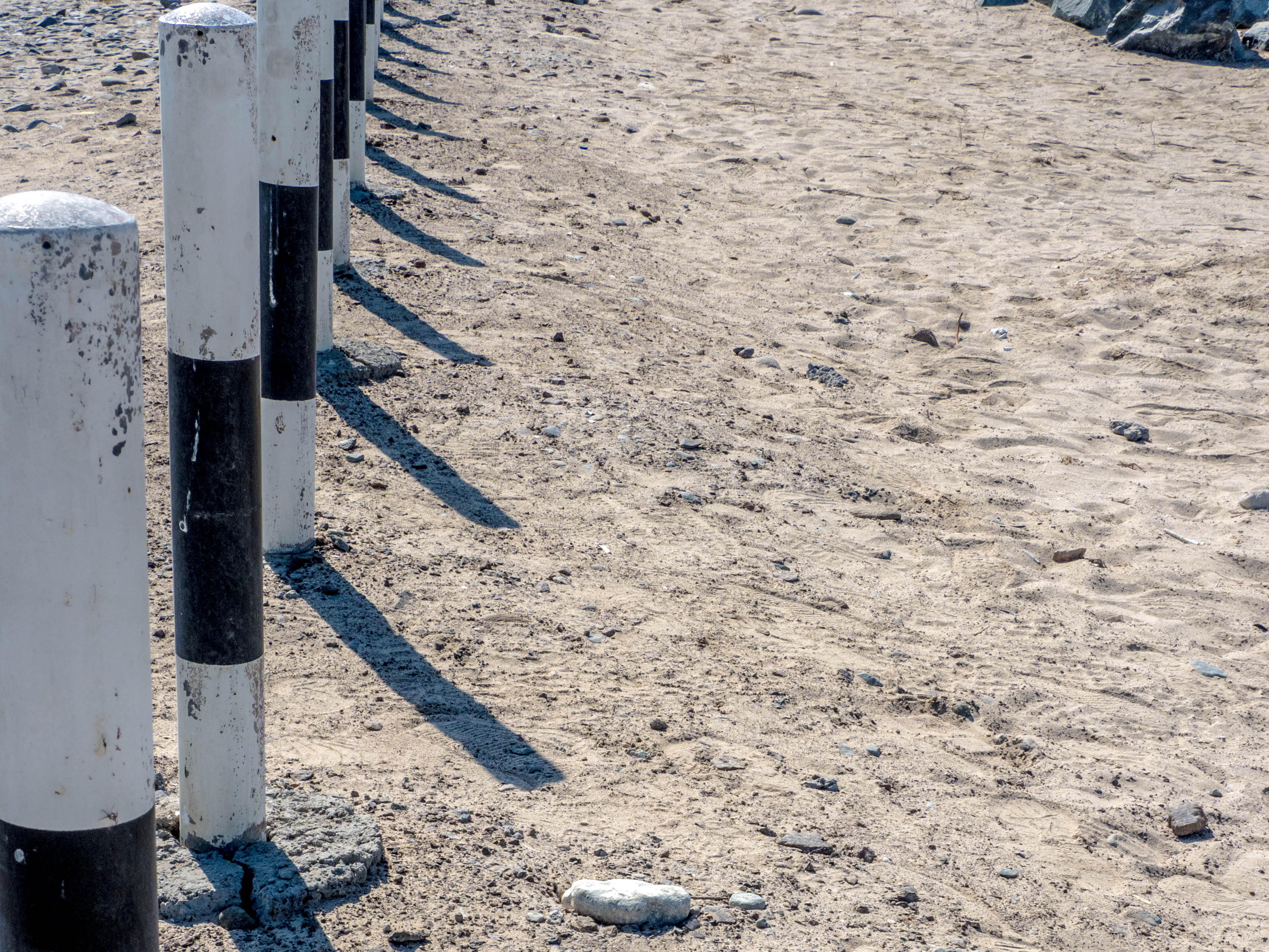
I also tried using a macro lens to underline that there is no actual difference from one side to the other. Though I don’t think it works very well.
I did find a fence that seemed to run along the line that Google Maps said was the border.
And at one point there was a car park on either side of the fence, meaning cars with Sharjah/Dubai number plates could face each other and yet would have to drive several kilometres to be able to park side by side.
And there was also the fact that the border runs down the middle of the Mamzar Beach bay:
I also decided to look at interior borders this week. I have read a lot of the comparative mythologist Joseph Campbell’s work, and have always been interested in his ideas of liminal spaces – entire places designed specifically to change the psychology of the initiate. These range from the caves and sweat-lodges used in ceremonies to initiate adulthood in males of different tribes to the great cathedrals of the Middle Ages where the use of stained glass, incense and even echoes from high, vaulted ceilings would combine to transform all the senses. Working in a school, it is now de rigueur to have a sign on the door of classrooms along the lines of: Which is a liminal border too, of sorts.
Another convention widely used, this time a social convention of the Middle East, is to have separate waiting areas for male and female customers. Or, in the case of this doctor’s surgery, male and female patients: The thing here being that, very often, there are no signs and it is taken as common knowledge that one area is for women and children only.
Another internal barrier that is essential to understanding this part of the world is the doorway into shopping malls. I am not a big fan of shopping malls, and I have not been to many malls outside the UAE since moving here nine years ago, so I have no idea whether this is current practice elsewhere, but car parks are shielded off (also, another opportunity for advertising). Furthermore, malls have a kind of airlock – two sets of sliding doors with an atrium (usually for toilets, cash machines and ‘lesser’ businesses like shoe repair and car window tinting) to ensure that the heat outside doesn’t impact the air conditioned interior. Even further furthermore, these atriums (atria?) are usually perfumed, and each mall has its own signature perfume.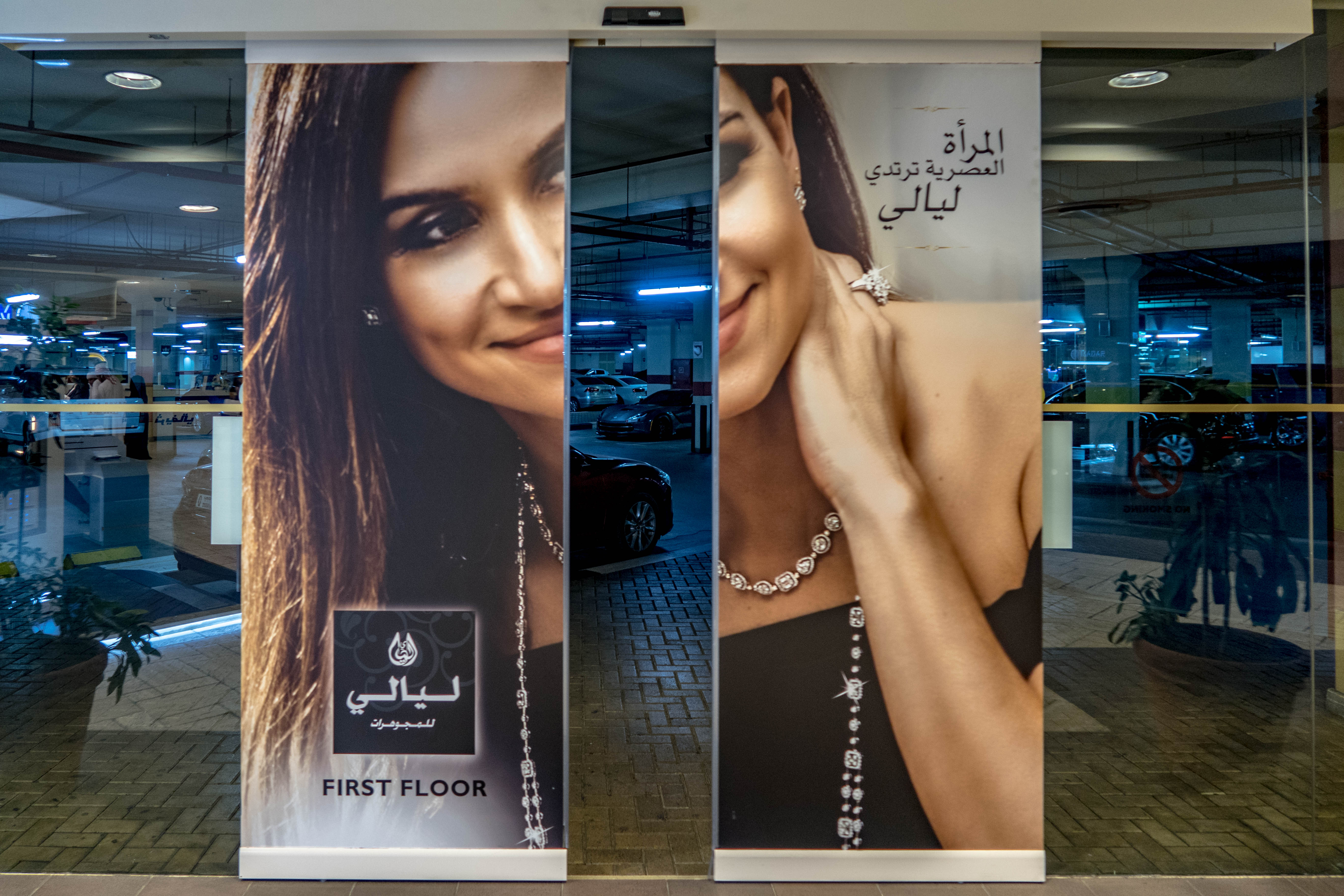
Overall, I am not sure how effective these ‘internal’ photographs are, and whether or not they are too different from what else I have been trying to do to be able to integrate as part of this specific project, or whether to develop the idea and use it as part of a broader project.
Week Eight:
A dawn trip to the Dubai Water Canal and the Jumeriah Pearl this week. Dubai Creek is the centre upon which the city was founded as a pearl diving village way back when. It has been the commercial heart of the city up until relatively recently and is still the port from which hundreds of traditional dhows set sail to Iran and India and Pakistan. It is, however, a creek – a saltwater inlet. It may once have been a river mouth, but running water from the Hajar Mountains has long, long since dried up. Recently, and incrementally, the creek has been extended – and a few months ago, the Dubai Water Canal (as opposed to the Dubai Root Canal?) opened up and extended the extension of the creek back to the sea, thus effectively turning part of Old Dubai into an island.
I thought about how rivers very frequently form both geographical and political borders, and having looked at the geographical borders of mountains, desert and sea, wanted to see if this newly opened canal could be considered a border. Although I am pleased with the shot, I’m not currently entirely convinced by the rhetoric and will need to investigate the ideas of borders further to see if this can really be a part of the project, or whether I am just shoehorning it in.
There is also, in this area, a liminality between the famously developed skyline and the parts that are still catching up (as many people have said, Dubai will be lovely, when it is finished)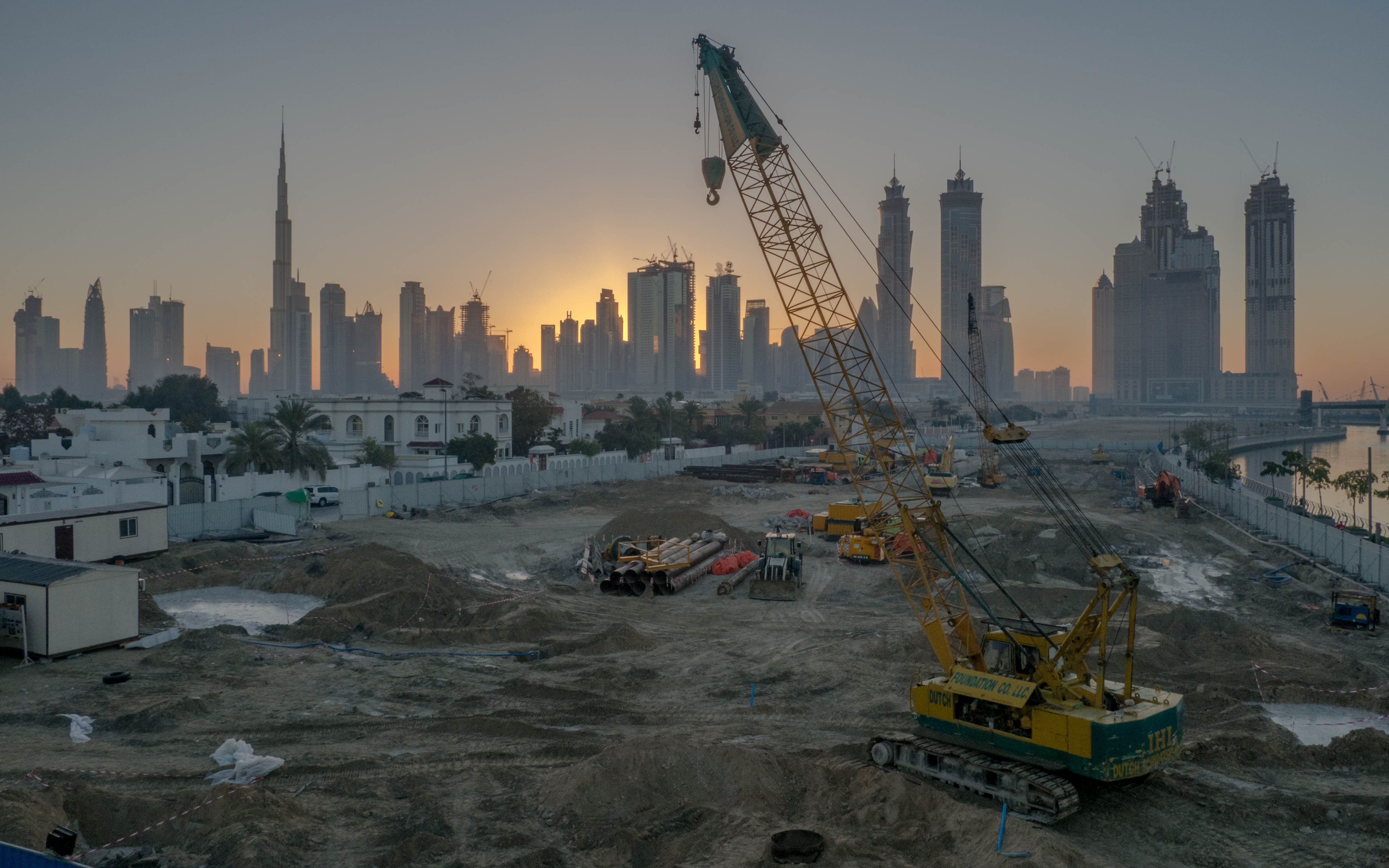
I also visited the Jumeriah Pearl – one of the many man-made islands along Dubai’s coastline. This one is nascent and largely undeveloped, and also delineates the border between fashionable Jumeriah and the industrial sprawl of Port Rashid shipping port and dry docks. Although I got several good skyline shots of Downtown Dubai from here, not many would fit the project. As a mostly undeveloped area, in the early morning, it is still used by the lower-paid workers to supplement their income by fishing and collecting shellfish, which could show a liminality between cultures, socioeconomic groups and traditions.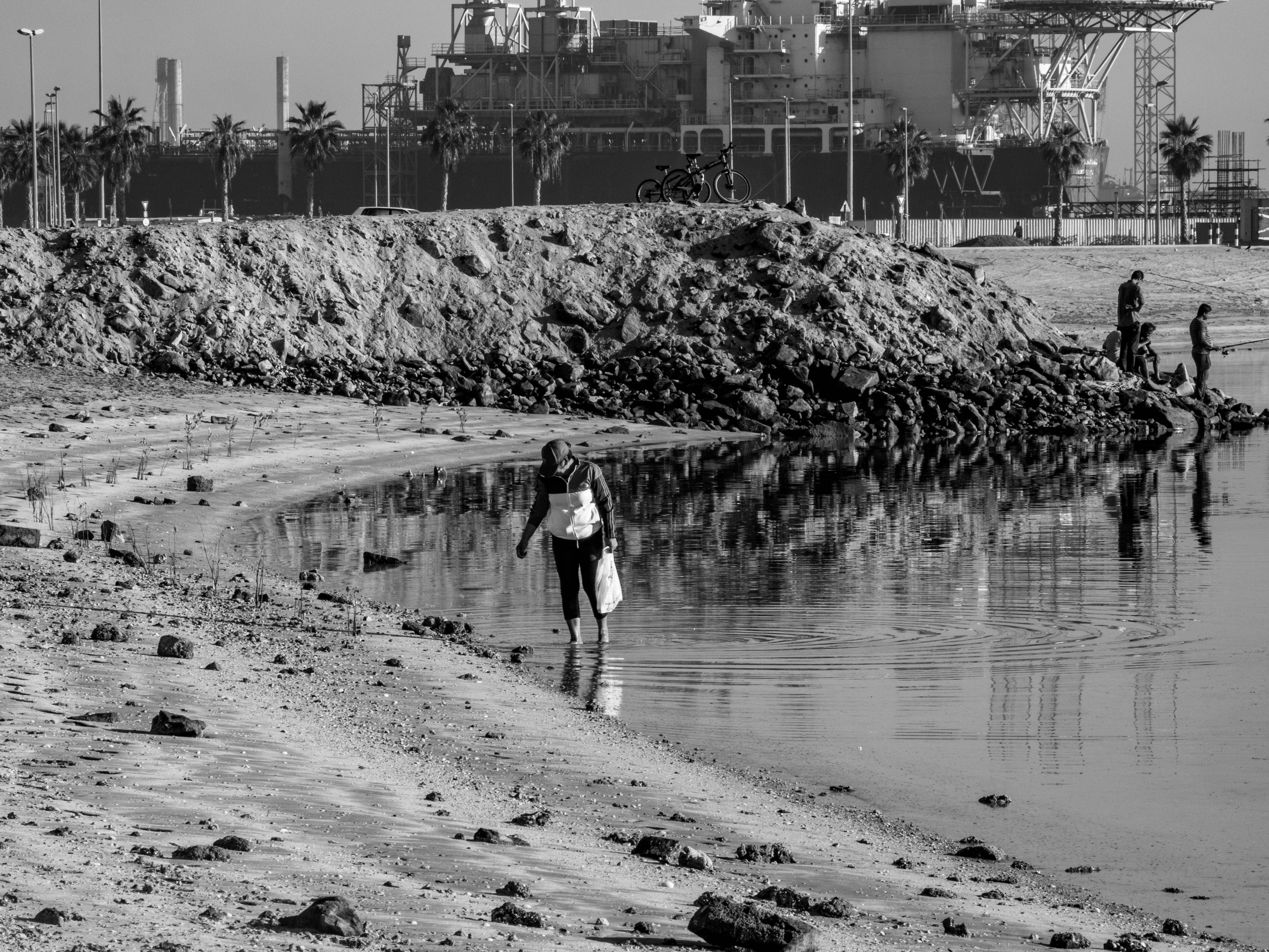
There are also a fair few people that use the area as a picturesque and free camping and picnic spot.
The final shot I got on this outing is one I really, really like. It fits the project – it shows the idea of borders extending out to sea – the three stage maritime border that the ship is heading through. I also feel that it fits the desaturated, almost gentle aesthetic that I have been pursuing over this and also the last unit. I am not 100% certain about the ripple in the immediate foreground, though this may suggest three stages: (implied) land, the light-pole and the ship heading into international waters.
Week Nine:
Big, big change this week – I have decided to return to Europe, and most likely the UK, in July. This means that my overarching idea of a UAE based book with a different focus for each chapter is no longer viable and my final project will need reconsidering. It also means that I can extend my project for this unit beyond the borders of the UAE and use the shots from Azerbaijan (and not worry too much about the location of the airport border shot) and use shots from this term before I returned to the UAE such as this shot of the border between habitable and dangerously radioactive taken in the Chernobyl Forbidden Zone:
It also means that my two week Easter trip to Estonia, Latvia, Lithuania and Poland could be rich with possibility.
I have an ongoing personal series of photographs set in airports – the ability to move beyond Dubai’s two airports meant that I could add to both that series and this project. I really liked the idea previously of the shopping mall automatic doors with the advert on them opening. So when I saw a similar shot in Tallinn airport with my trust pocket camera in hand…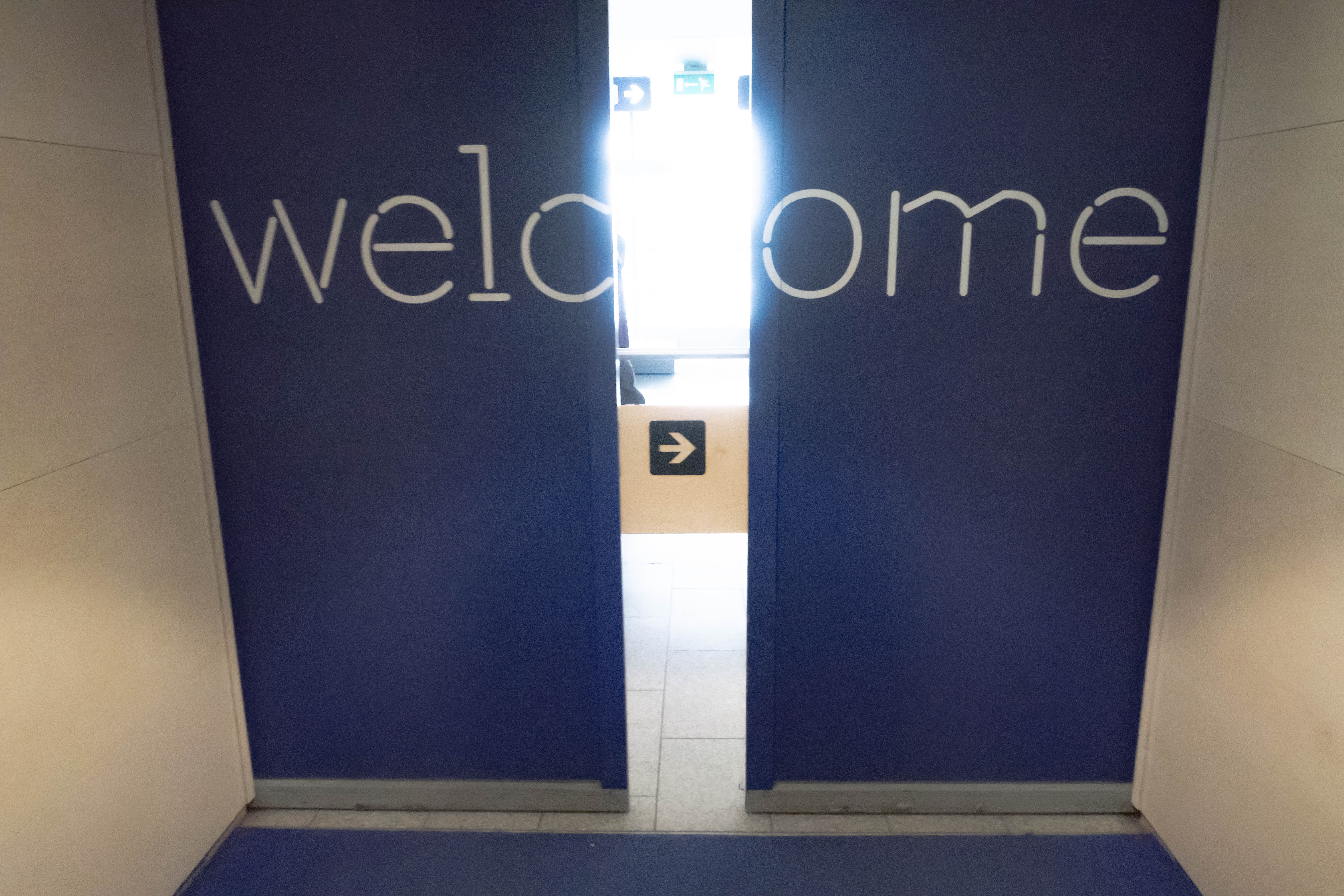 Sadly, I found out afterwards, that a 1-inch sensor inadvertently set to ISO 10,000 might not produce the sharpest shots. I do still like it though.
Despite Tallinn, Riga and Vilnius all being (to differing degrees) walled and gated cities, thus theoretically perfect for the project, I found it hard to produce anything that wasn’t either a tourist/postcard shot: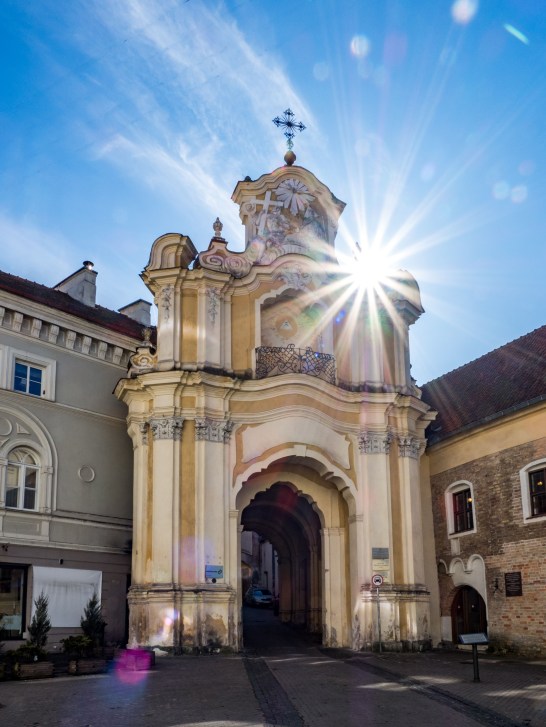
Or just not very interesting such as this shot of Vilnius’s Gates of Dawn (there was no piper – I looked)
In Tallinn, I spent half a day looking for a music-related car-park barrier (that’s a border, right?) that I half-remembered from a previous visit – it turned out to be the barrier for the Tallinn Opera House: Though I still think this is one of the best things ever, I’m not sure it fits my project.
I did toy with the idea of ‘the wrong side of the tracks’ being either a border or a liminality: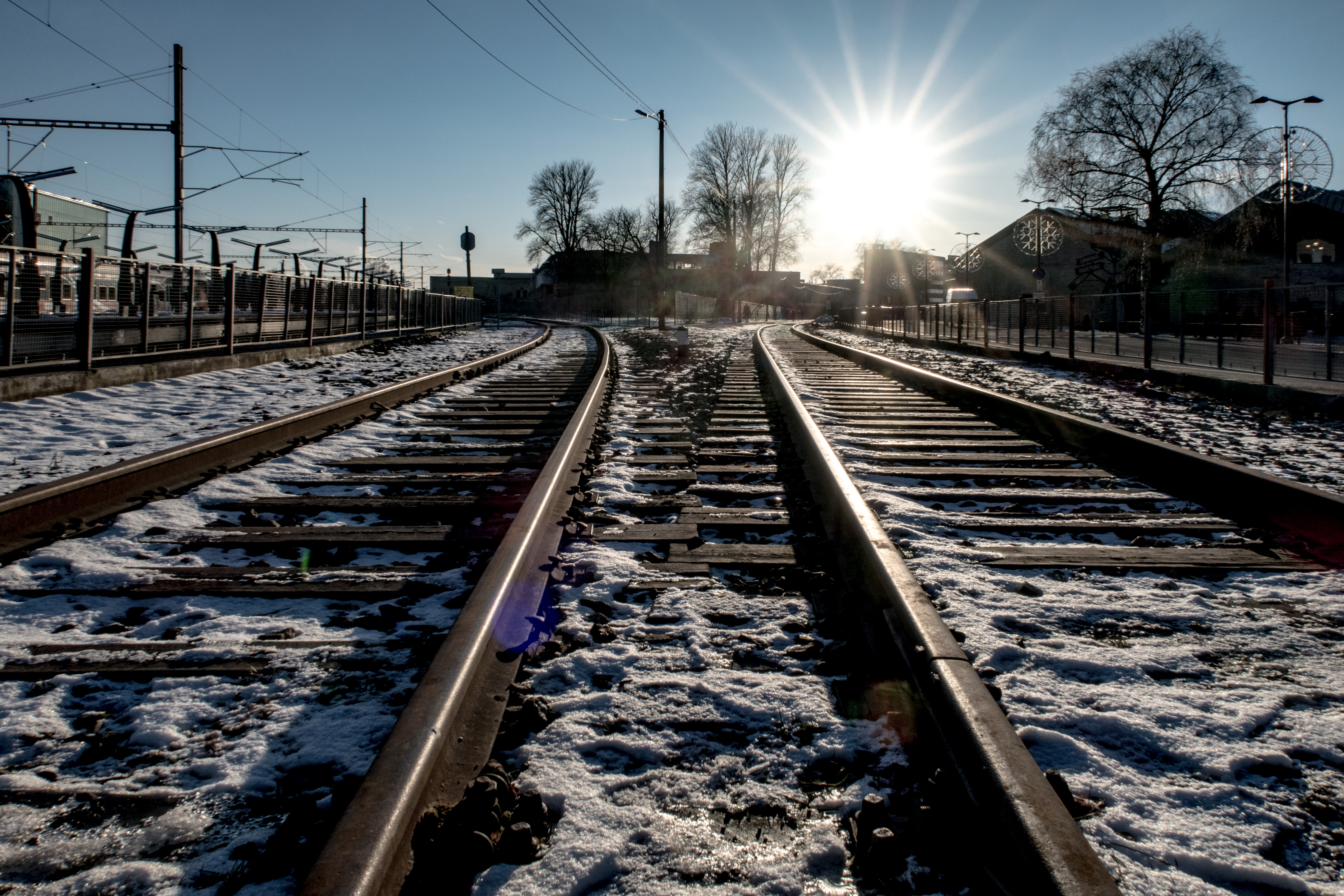
And the idea of bus and train stations being liminal in the same way that airports are: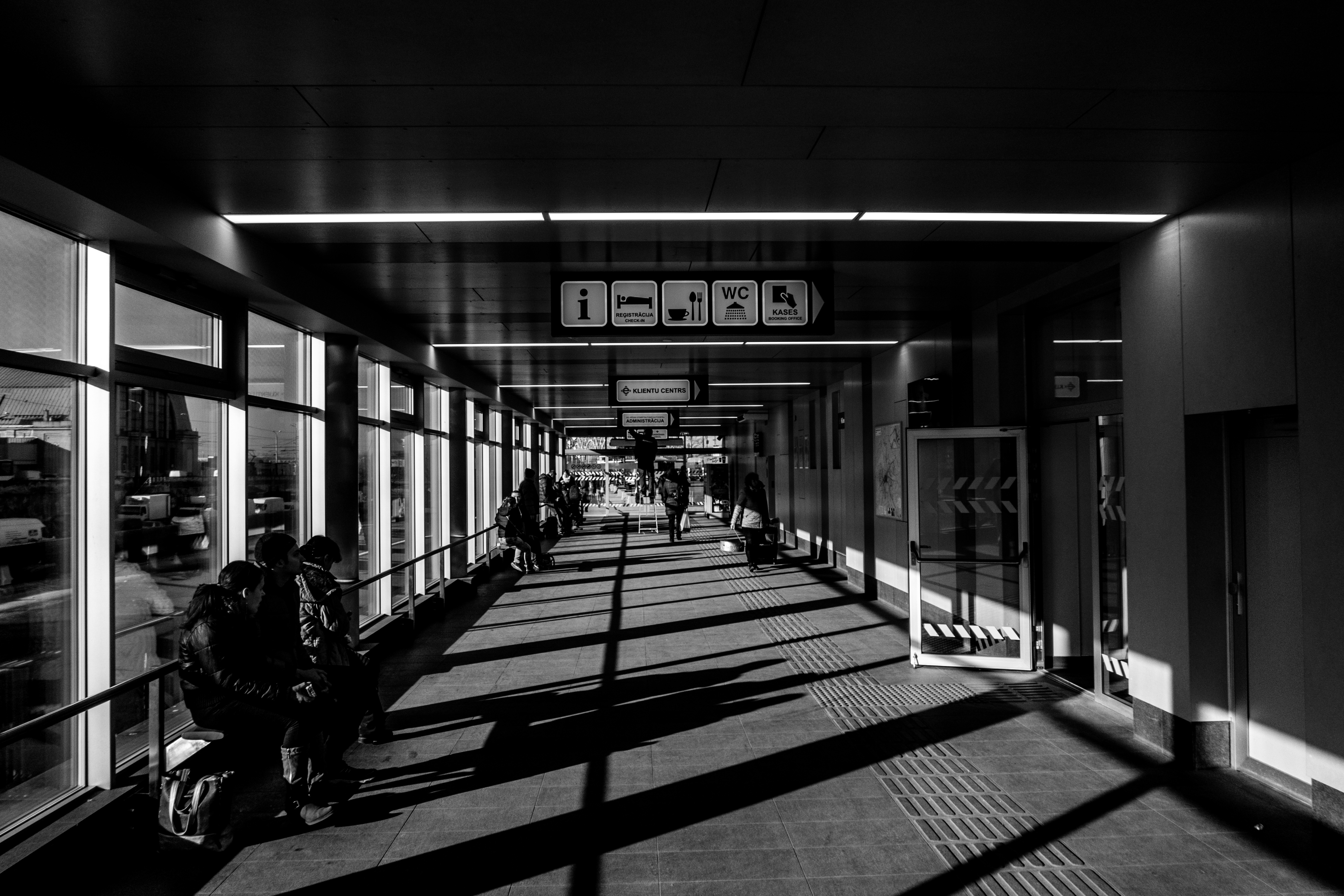
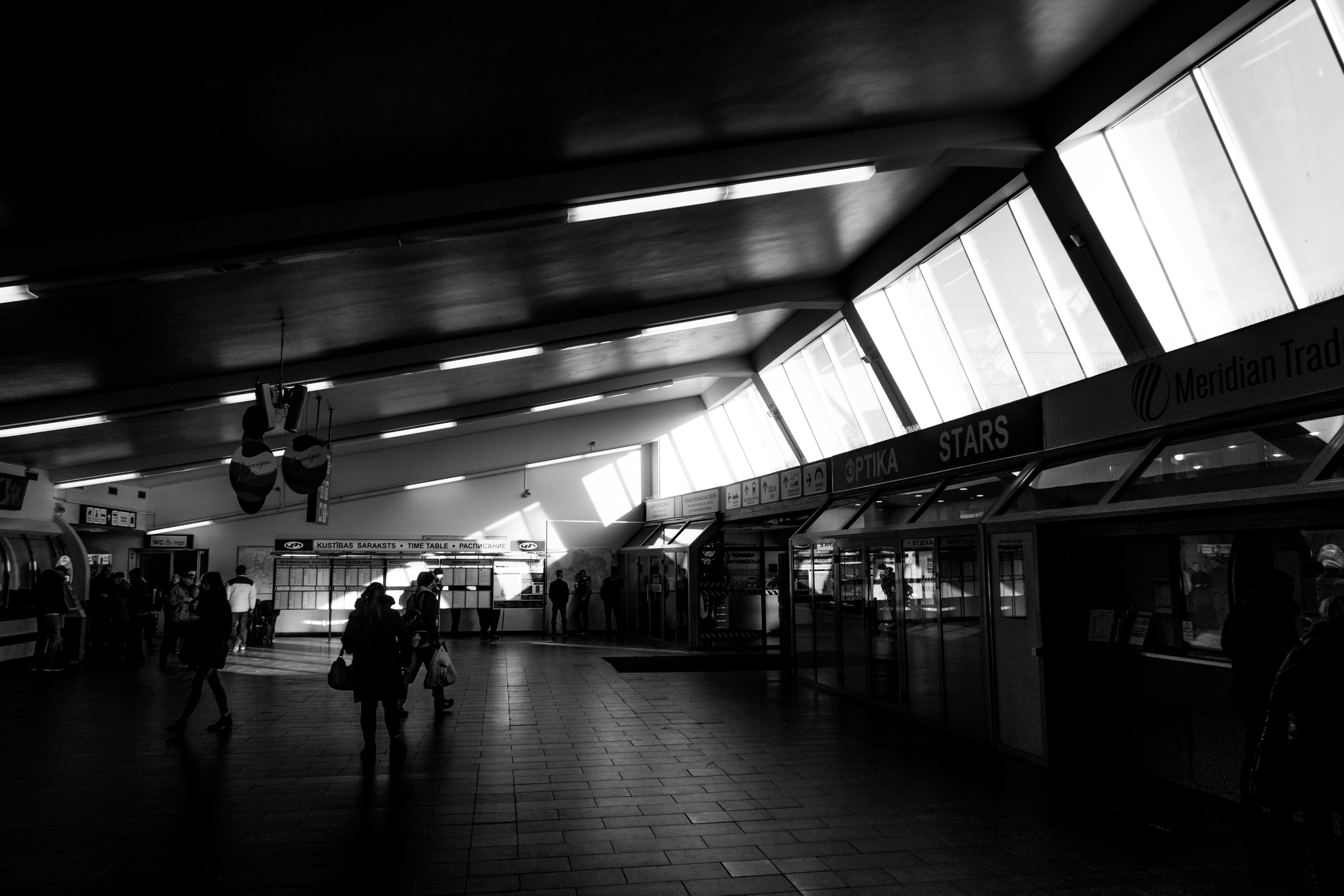

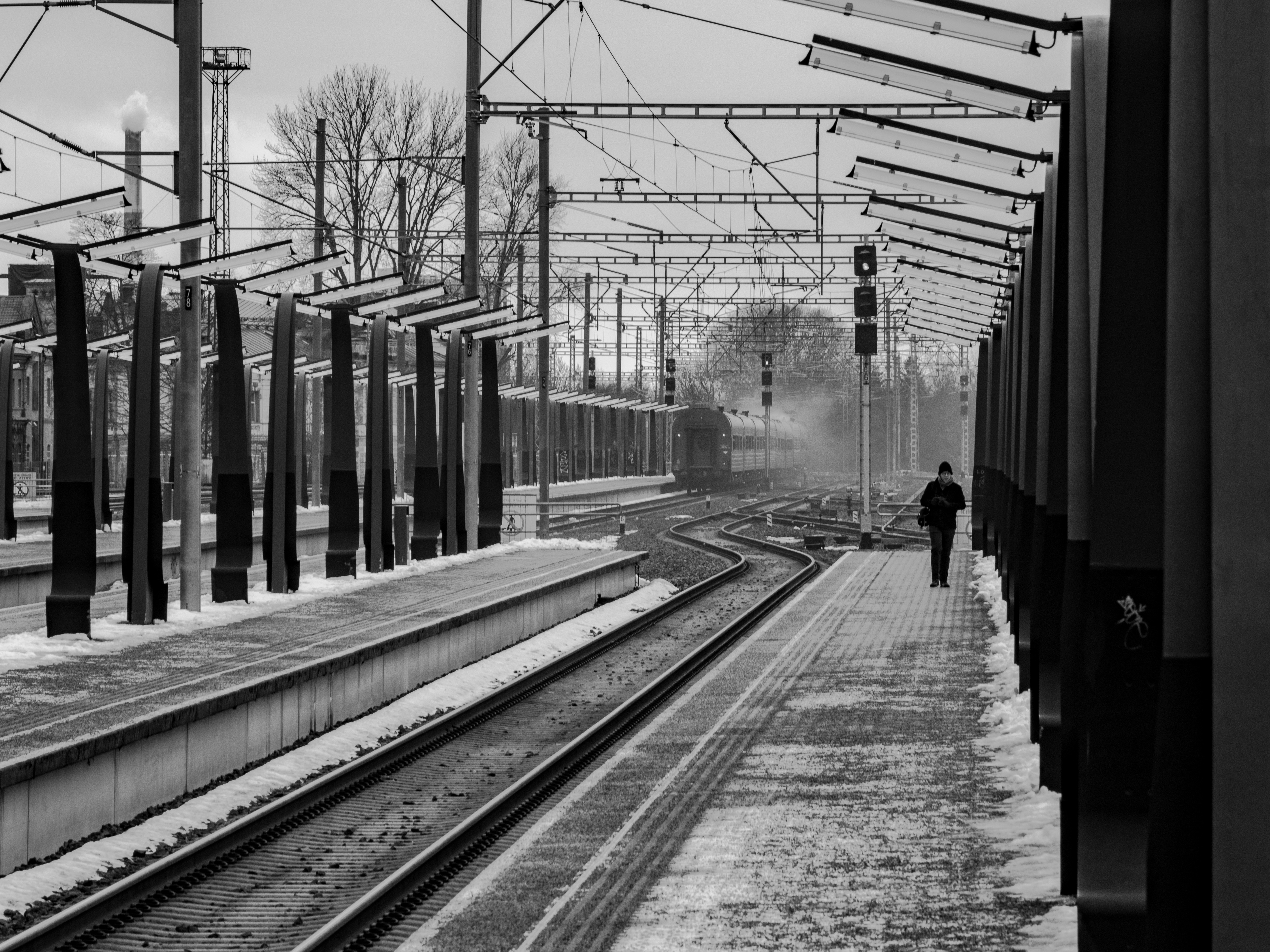
But I am not sure I am convinced. Similarly with this shot of pavement markers in Tallinn:
However, the bus journey between Riga and Vilnius did produce this shot, which I think works perfectly with my ideas – I was using Google Maps to identify the exact point at which the non-stop bus crossed from one country to the next. A few moments before we reached the border, I lost connection, so this is a shot of where I thought the border might be. In the absence of any identifying signs, this could or could not be the border. This underlines the idea that national borders are entirely notional (the signpost visible there, incidentally, was for a supermarket and not a declaration of nationhood or anything):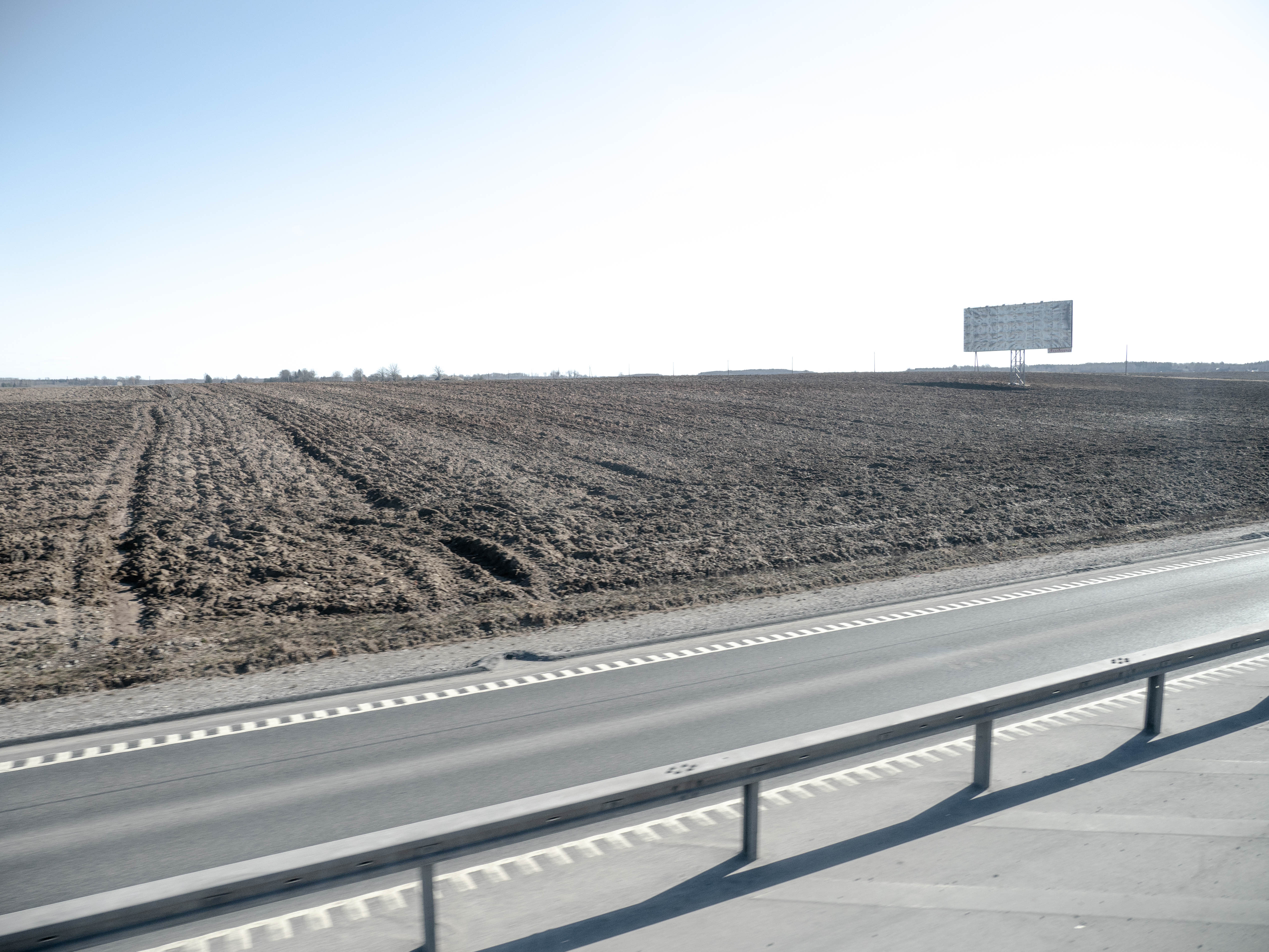
The next stage of the trip – from Gdansk through Poland by car, promised much. My main focus initially was a trip to the Hel peninsula north of Gdansk. As well as affording me far too many Facebook puns (I have shots of the road to Hel, the gates of Hel, a Hel cat and many, many more), this is seen as the starting point of Poland and (to Poles) the starting point of Europe. It is also a spit of land that extends far out into the freezing (literally at this point – it was a cold day in Hel, and parts of Hel froze over) seas that almost surrounded it. Liminal for sure.
The one shot I really liked from Hel was taken from the plaque that states that this is the starting point of Poland, and is of Hel beach, and is of a spit of sand that almost replicates the spit of land that is Hel itself.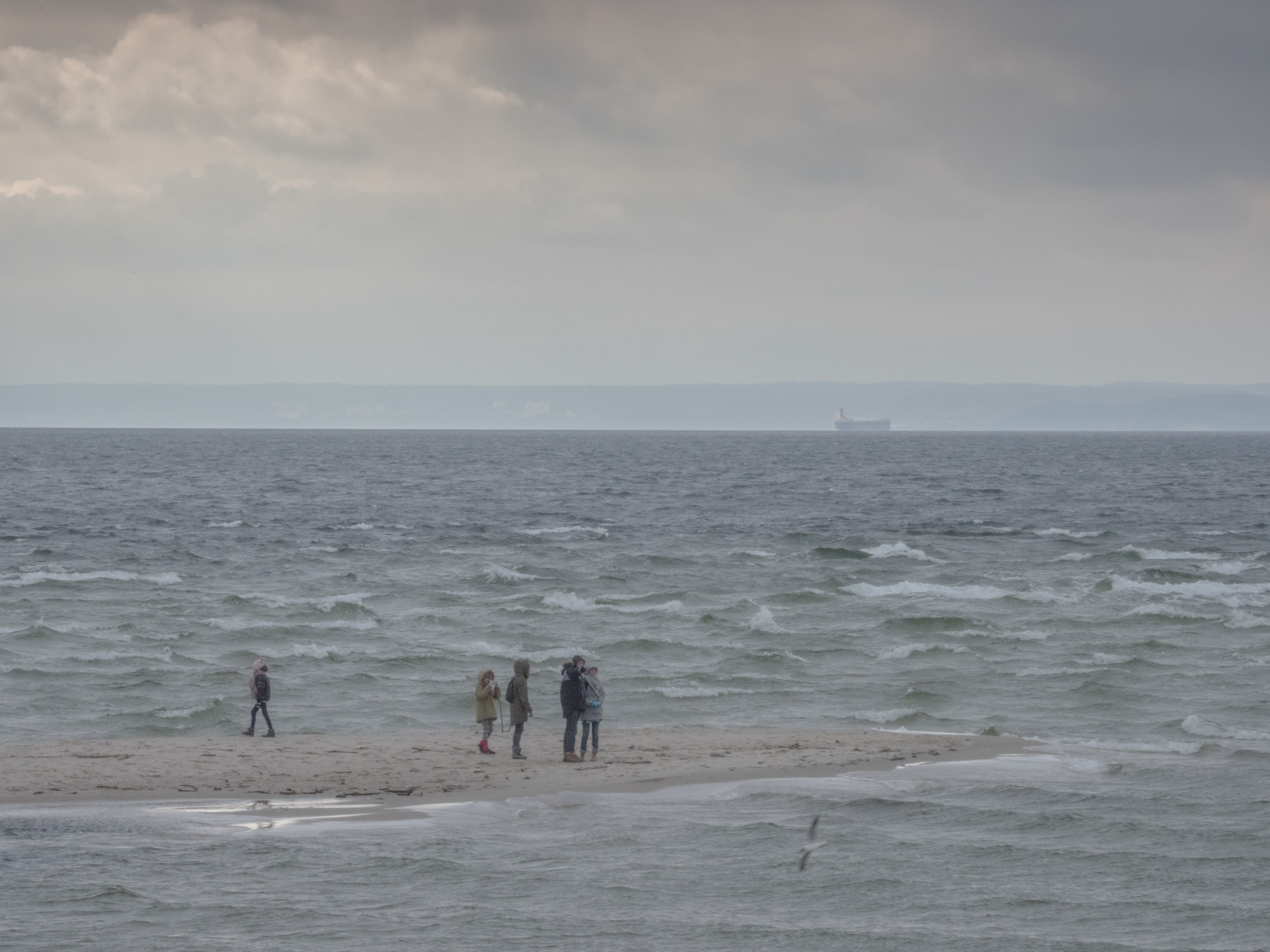 Although this shot has people in it (gasp!) I think it sums up perfectly what I am trying to look for – this is a border and there are no two ways about it.
Returning to Gdansk, I stopped off in Sopot, which has Europe’s longest wooden pier. This, for me, is perfect liminality – people are not happy with not being allowed past the physical, geographical border of the shoreline, so they use engineering to go a little bit further. The Victorian equivalent of Dubai’s man-made islands. Although this is liminal rather than a border, it shows I need to really think hard about my central idea.

The rest of the trip to Poland produced (as well as superb food and beer) several more walled cities that were difficult to reduce to a photograph, and the original walls of the Warsaw ghetto.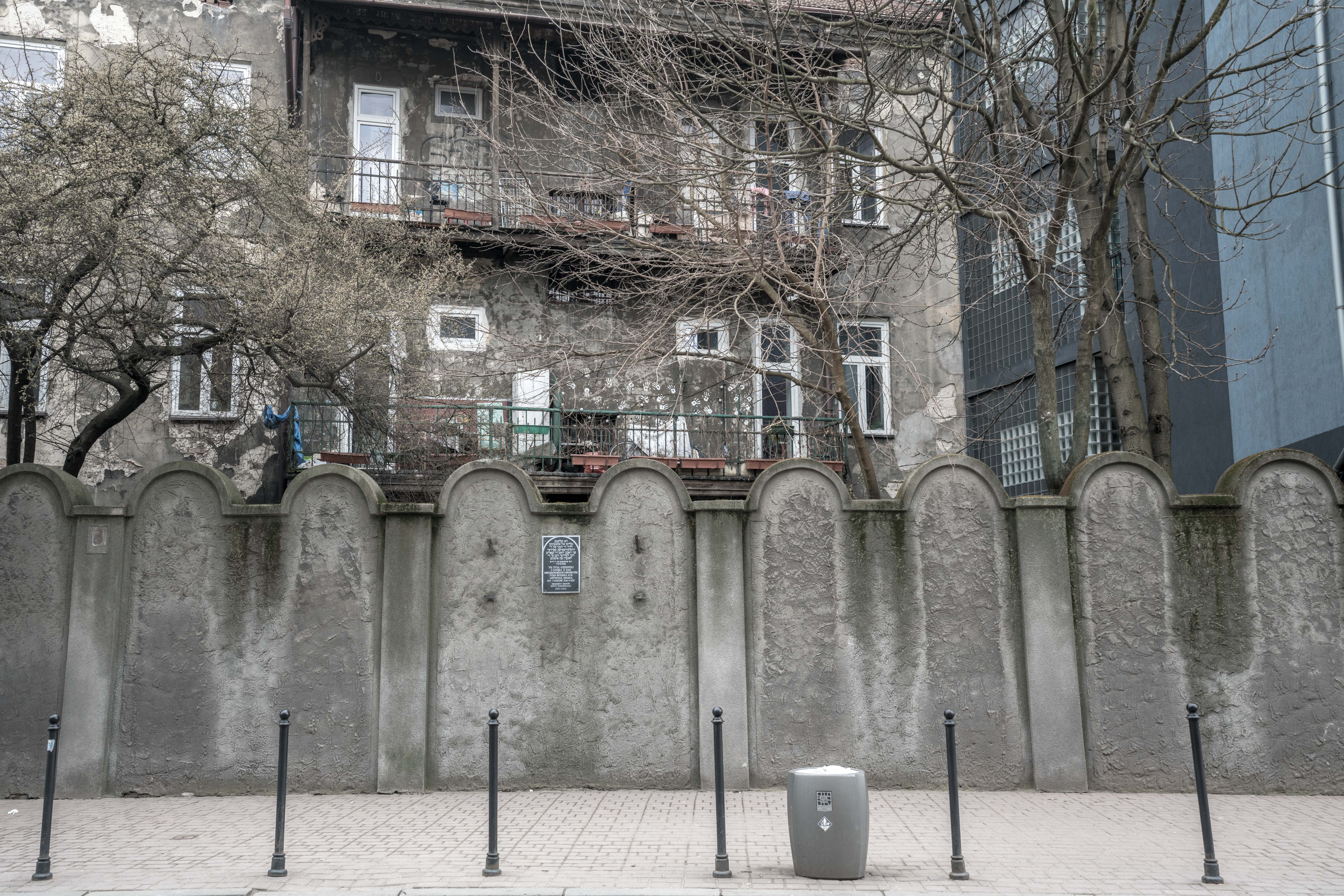
Iconic? Yes. Visually interesting? Not with my level of ability.
Although Wroclaw didn’t give me much in terms of this project, there was one thing that made me smile, especially I had been reading Ways of Seeing just a few weeks before…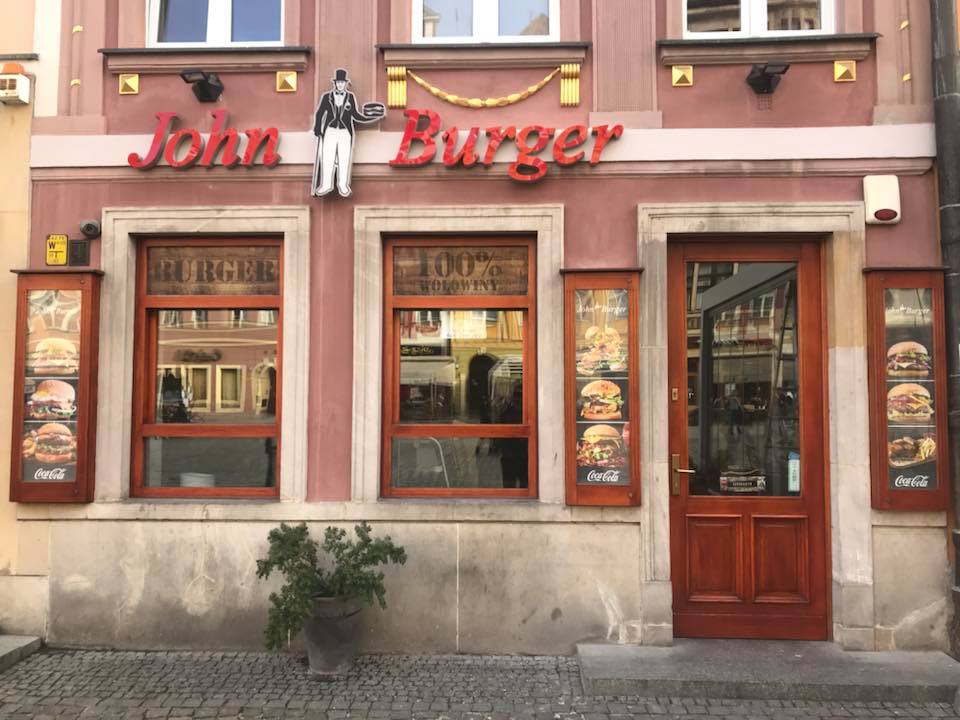
Although the trip finished in Krakow, and the Auschwitz-Birkenau tour would have offered many possibilities, it is a tour I have done before and not one I would wish to repeat, and I am not sure about using something like that as part of something else when it should be an entirety to itself.
The final shot I managed, which I do rather like, was taken from the window of the plane at Katowice airport: Very much both a border and a liminality.
Week Ten:
This week I took a trip to the northern border of the UAE. In the middle of Wadi Bih (a vast, (usually) dry canyon) there is a border post with Oman. I was hoping that this might show a confluence of both geographical and political borders, with the customs and passport control confined by a steep-sided valley. As it happened, the road, a rocky, barely passable path, did not disappoint, but the border itself was not much to look at:

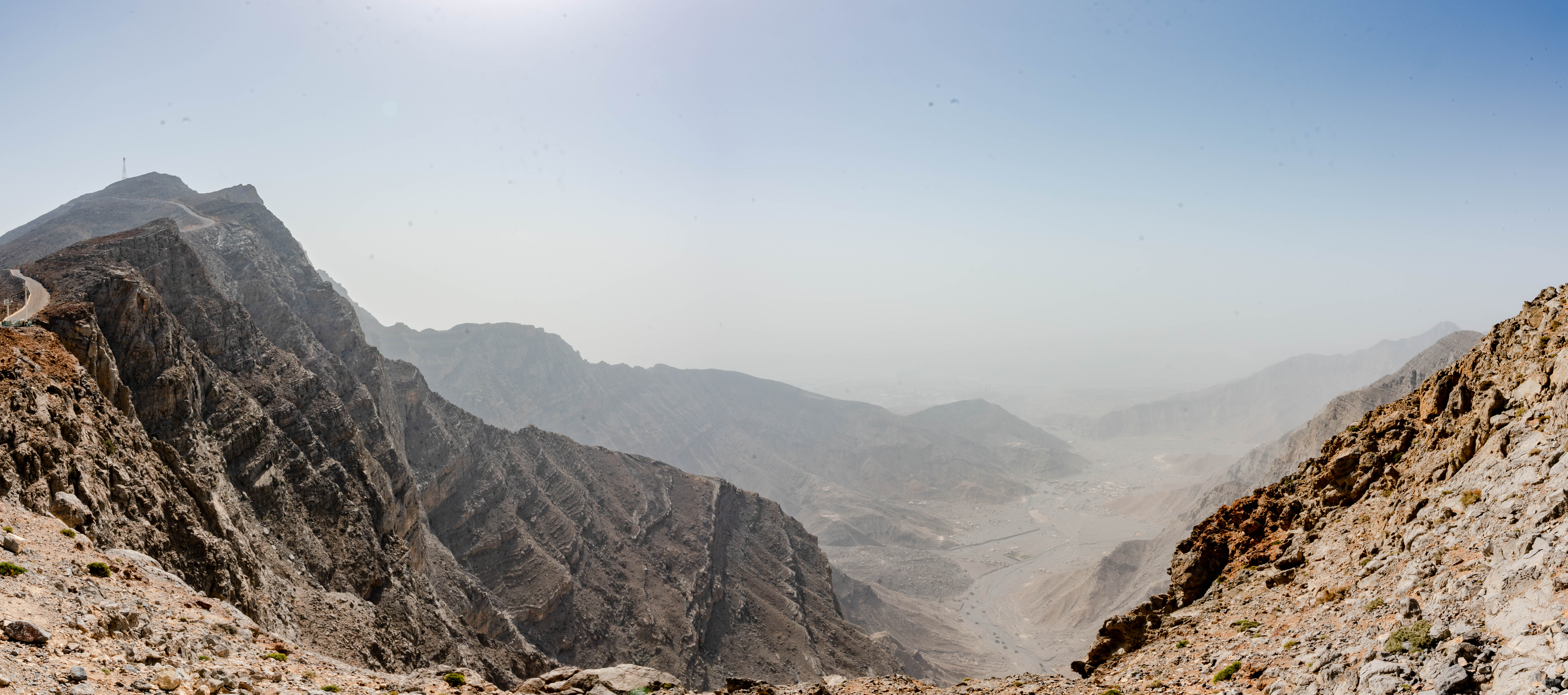
Whilst in the area, I also visited Jebel Jais, at 1,934m the tallest mountain in the UAE (a border of sorts, right?). Whilst as the top (at least, whilst in the car park as close to the top as road-building has managed thus far) I took many beautiful shots of the mountains (as well as one of the current end of the road)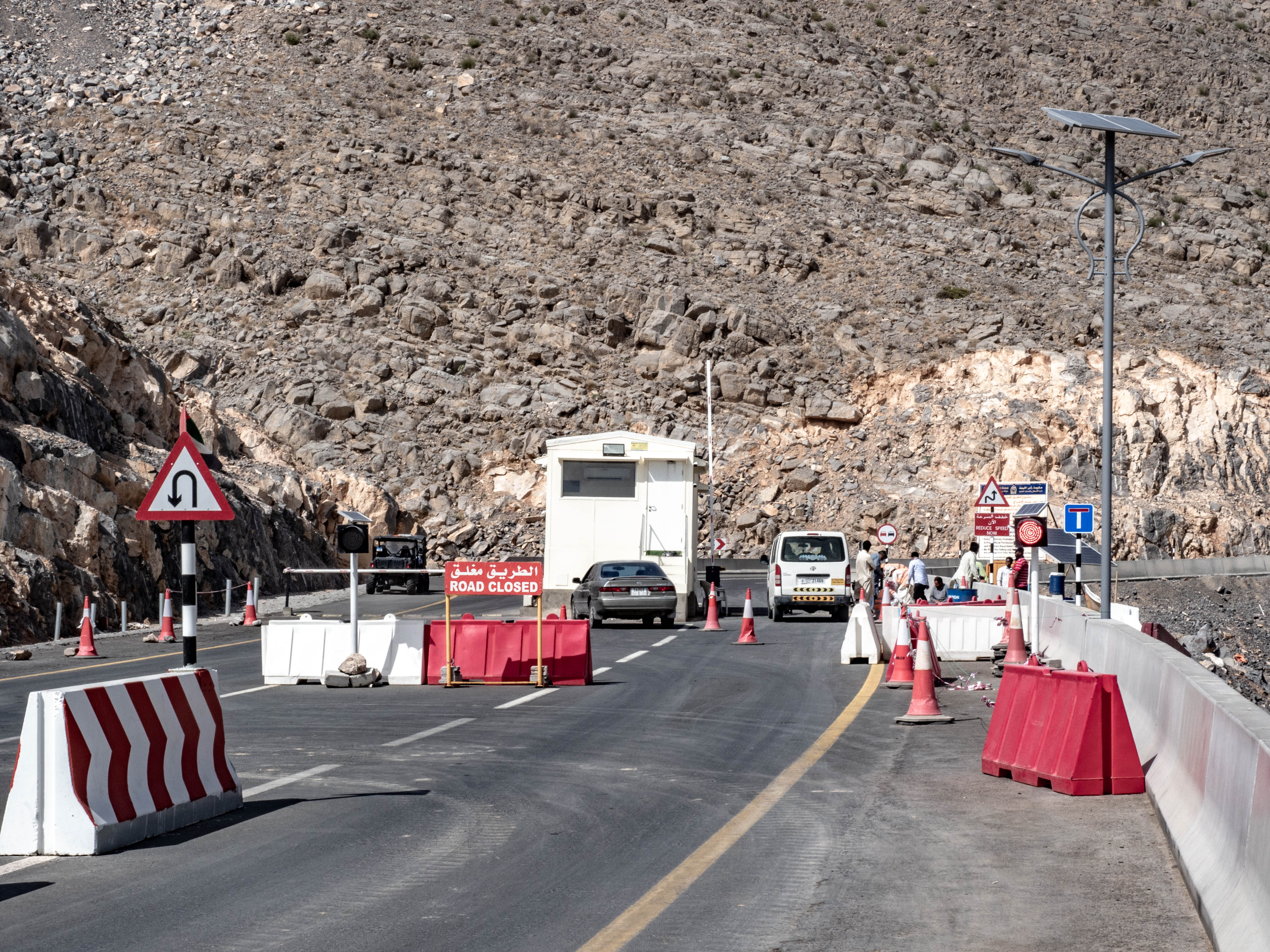
However, while processing, I found that the problem with photographing mountains formed from sedimentary rocks, particularly on hazy days, is that they don’t look that impressive. Though the road itself is, admittedly, something else.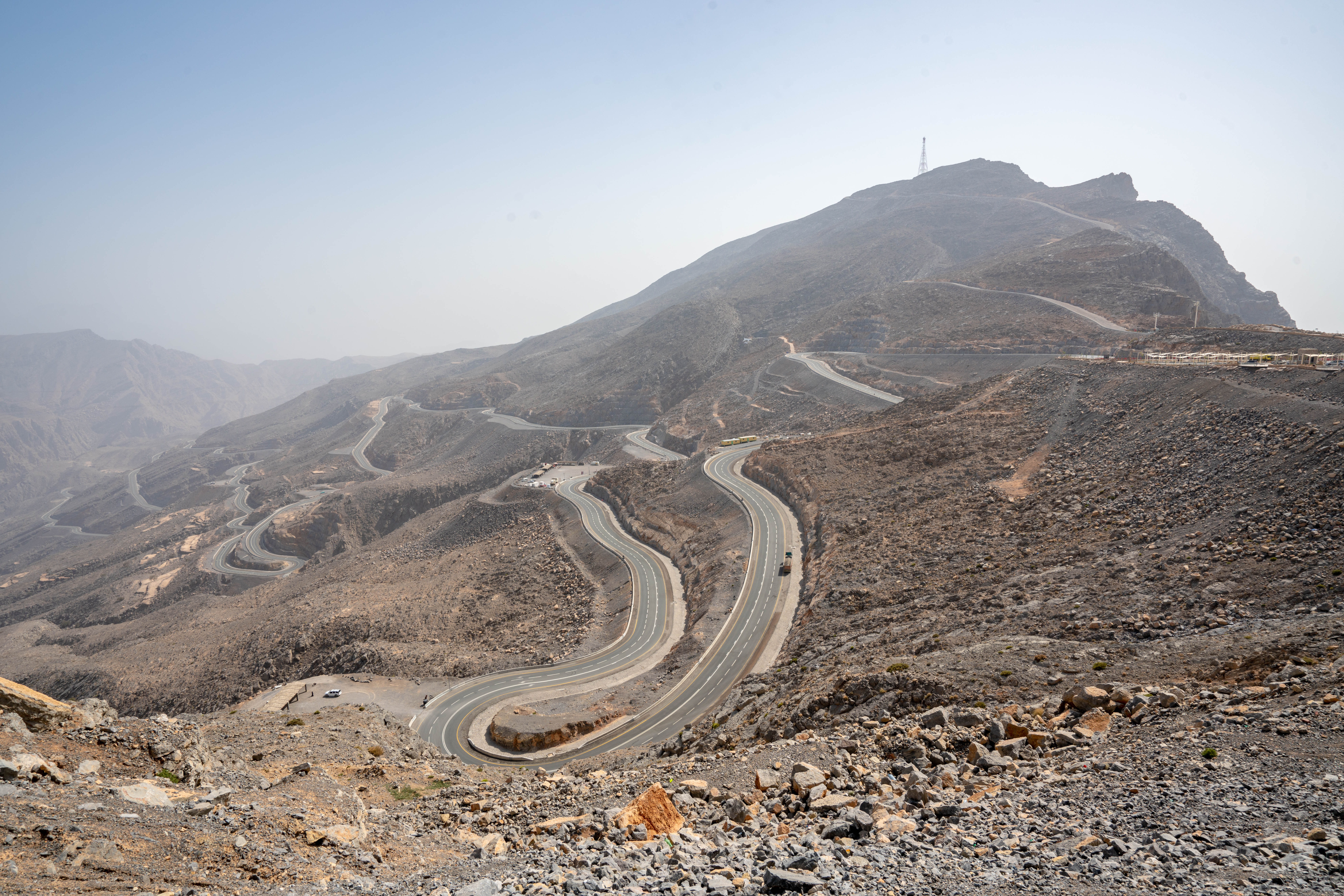

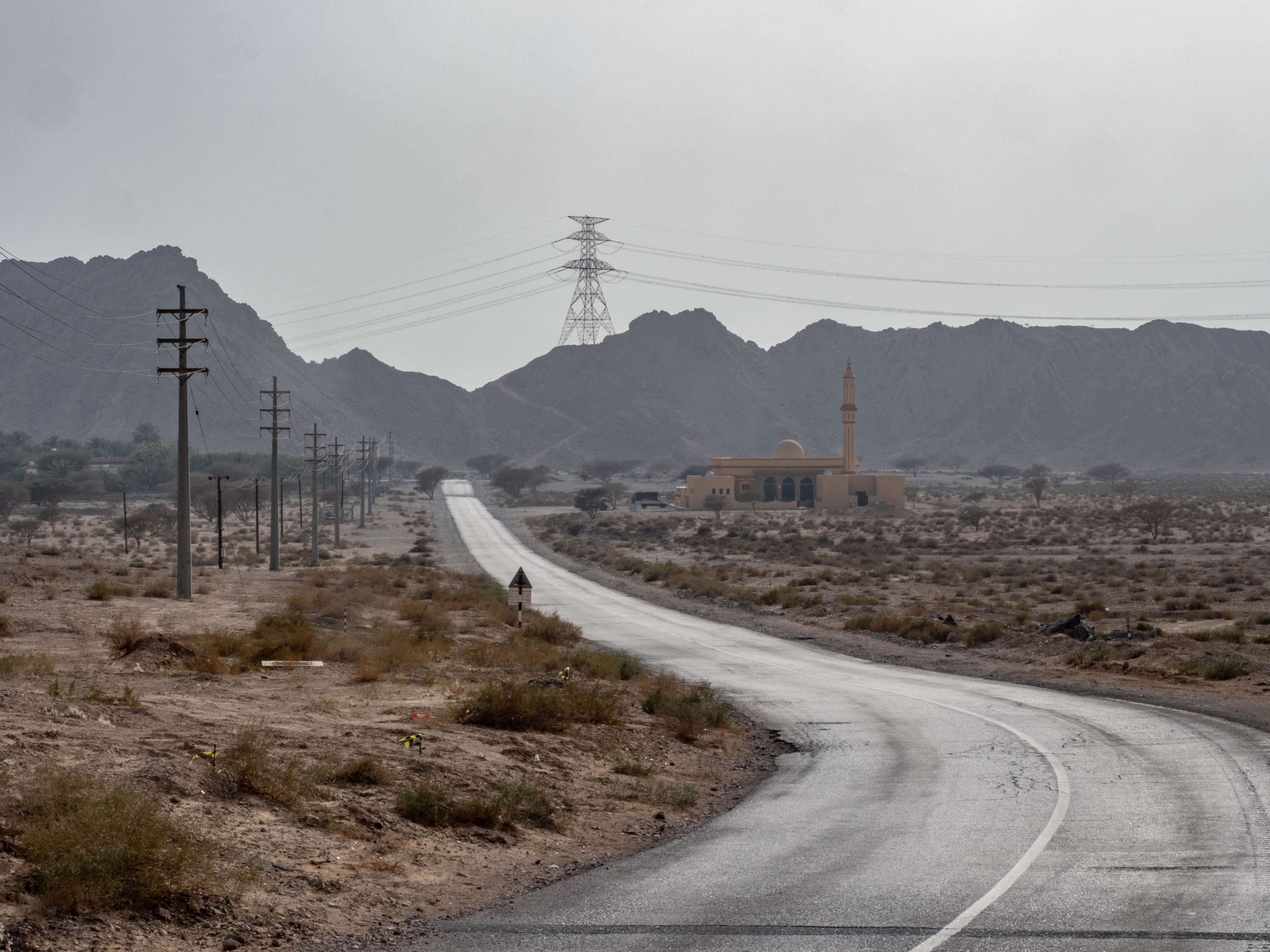
Returning home from this area took me past two places I though might be worth a look. The first, Jazirat Al Hamra, on the edge of the city and emirate of Ras Al Khaimah, is a village that was deserted en masse (for political/tribal reasons) in 1968 and has been left to slowly decay. I thought that this could represent a border/liminality between past and present, or living and dead. It is a strange place – completely empty, slowly falling apart, and yet within sight of the new, super-luxury hotel developments with which RAK hopes to rebrand itself as an upmarket holiday destination. I got a few shots with which I am relatively happy; however, I am far from sure that they truly fit in with my project, despite my slightly clumsy attempt to use old doorways and windows to suggest borders.

The second place I thought might work was the salt-flats along the shore between Ras al Khaimah and Umm Al Quwain: the perfect geographical liminality. However, although this works in practice, there was little to actually see.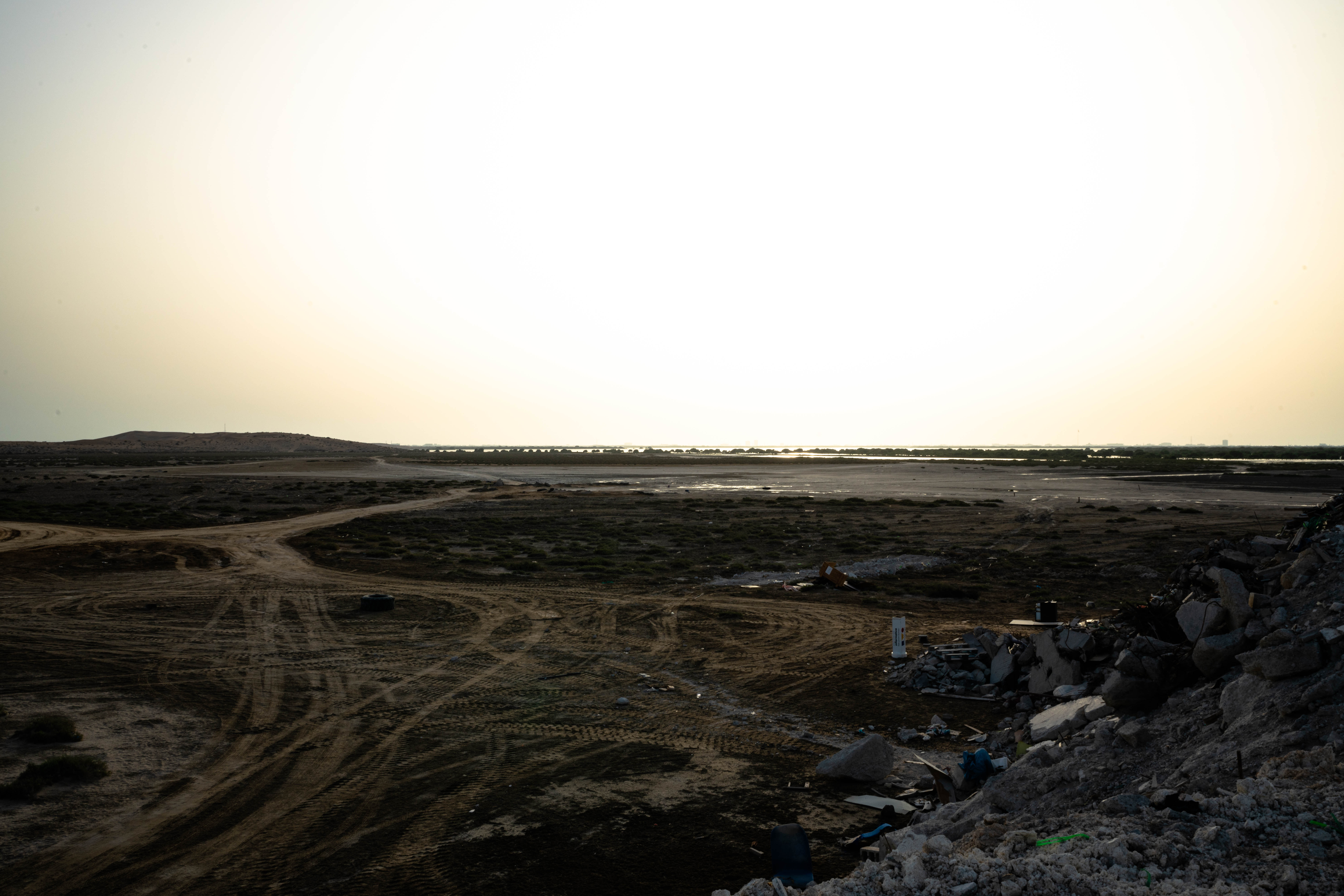
Apparently there are incredible salt flats near Al Sila’a in the Abu Dhabi emirate. However, this is close to the Saudi border, nearly 500km away and too far right now. And even there, so many hours later, there is nothing to say there would be anything to actually see…
Week One
Reading through the resources for week one, I was most taken with several ideas in the Barthes text, particularly the separation of denotation (first order messages) and connotation (second order messages) (Barthes and Heath, 1977, p16) and Barthes idea that press photographs have a”a weak signifier and a strong signified” (ibid P26) which is where the photographs I have taken and the ideas which I wish to develop regarding borders lie: the change in shape of the streetlights requires context to understand. It also gave me the idea to perhaps look at organising the photographs in terms of the strength of the signifier – those showing geographical borders (coastlines, mountains) will be stronger than those depicting theoretical, political borders. Something to bear in mind as I develop the ideas!
Barthes also raises the idea of text being “parasitic” (ibid p27) when applied to a photograph, which gives me something to consider when arranging what I envision my final project to be.
The other major research from this week has been looking more deeply into Stephen Shore’s photographs, particularly those of the American Surfaces book. This is the aesthetic that attracts me most – the open spaces and lack of context and seemingly irrelevant details are very much what I am aiming for myself.
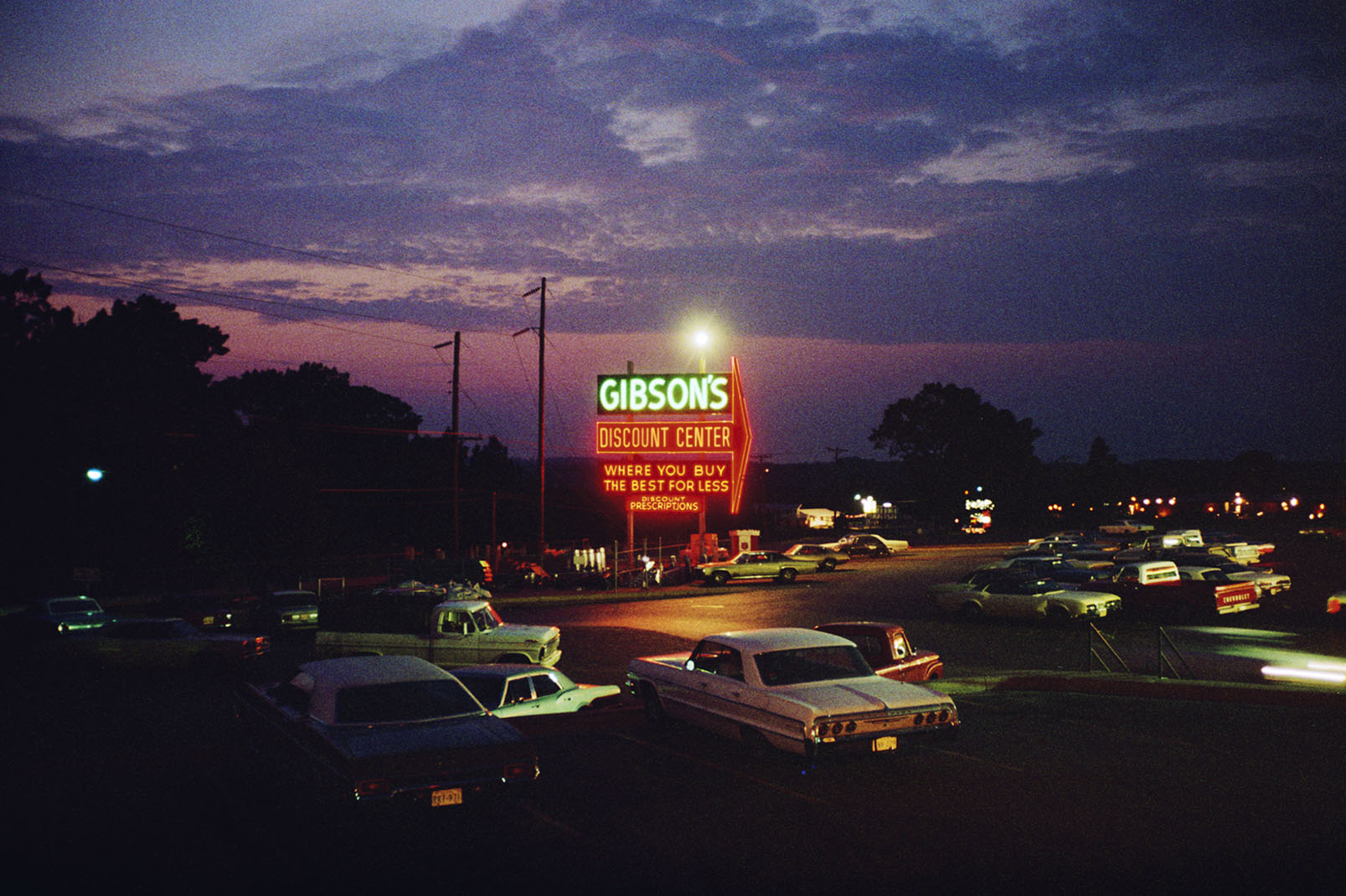

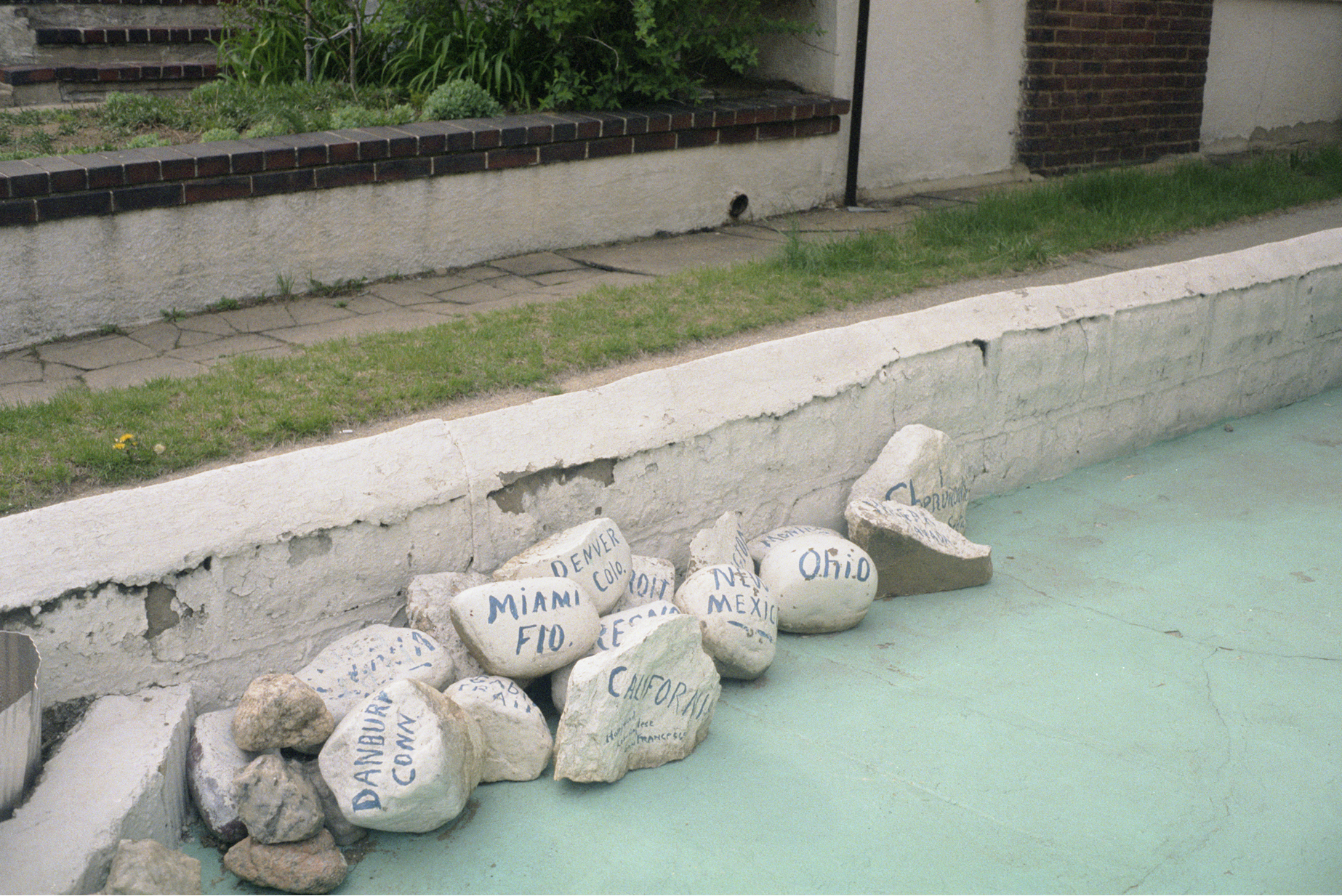
Notes:
Barthes, Roland & Heath, Stephen (1977) Image music text. London: Fontana
Shore, Stephen. (1972). Queens, New York, April 1972 [online]. Available at http://stephenshore.net/ (accessed 19 April 2018)
Shore, Stephen. (1972). Tyler, Texas, June, 1972 [online]. Available at http://stephenshore.net/ (accessed 19 April 2018)
Shore, Stephen. (1972). US 89, Arizona, June, 1972 [online]. Available at http://stephenshore.net/ (accessed 19 April 2018)
Week Two
Looking for ideas about how to photograph coastlines in light of the geographical borders part of my project, I came across the work of Suzanne Trower in the July 2017 issue of the Royal Photographic Society journal and followed up online.
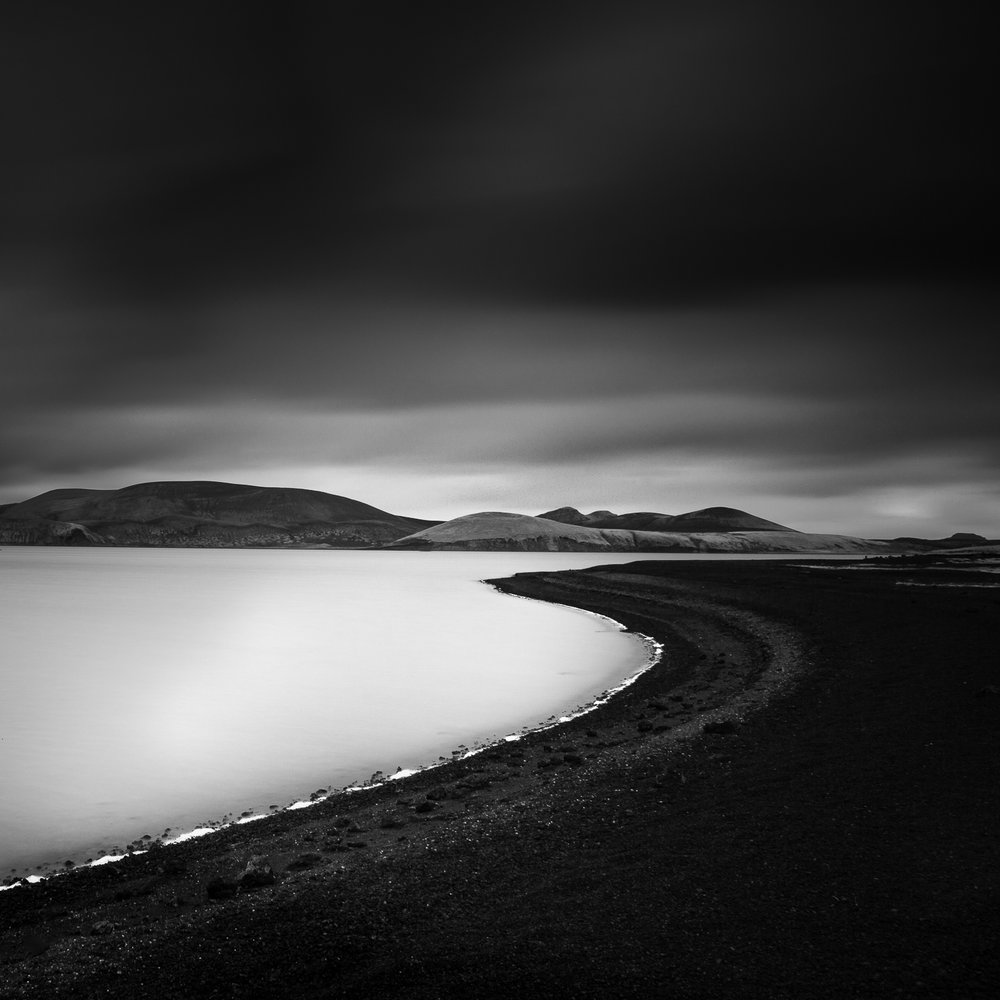
I found this very striking indeed, though almost the diametric opposite of the aesthetic I have been pursuing – monochrome and high-contrast as opposed to my low-contrast colour shots. However, it does raise the question of whether or not the aesthetic I am pursuing is the most suitable for the subject matter. Something to bear in mind…
Notes
Trower, Suzanne. (?). Silver Lining 3 [online]. available at https://www.suetrowerphotography.co.uk/silver-lining/ (accessed 19 April 2018)
Week Three
Looking further into Barthes idea of the separation of strong and weak signifiers in photography, I looked back at Alec Soth’s Sleeping by the Mississippi, one of my favourite photobooks. One shot in particular, a shot of a small, wooden house with a beaten-up satellite dish and a sprinkling of trees, both bare deciduous and coniferous beneath a bruised-looking sky illustrated this. It is an aesthetically pleasing shot, balanced, harmonious. When taken in conjunction with the rest of the work, it does benefit from context; as Stuart Franklin defines it, “the picture is normally seen connected to the others in the book, like a stanza in a poem” (Franklin, 2016).
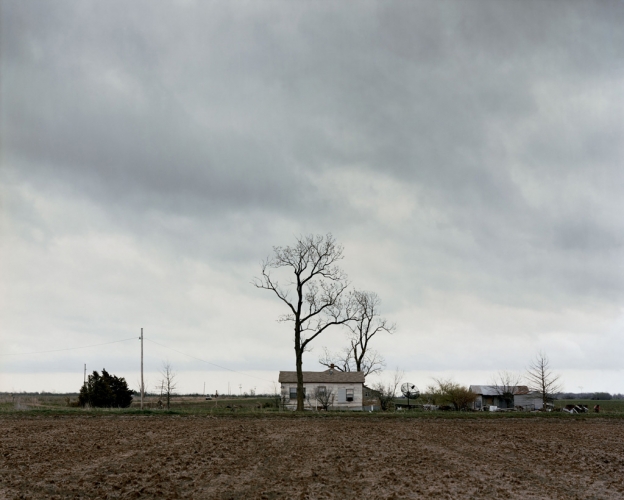
The further contextualisation afforded by the title, however, changes our perception of the photograph – this is no longer a photograph of a typical house along the Mississippi (though it is that) – it is a photograph of a specific house, and one whose history has added considerably to the rest of the world’s understanding of the reason.
I am still yet to decide whether or not to title the photographs in this project, but this is something that I will need to keenly bear in mind – how much will a title alter the strength of the signifier and how desirable is this within the wider context of what I am trying to show?
Notes
Franklin, S. (2016). The Documentary Impulse. 1st Edition. New York: Phaidon. p162
Soth, A. (2017). Sleeping by the Mississippi. 1st Edition. London: MACK. p?
Week Four
Moving on from Alec Soth (I think I may be doing things backwards here…) I have been reading about the idea of Deadpan photography – something I brushed up against in the last unit and which has, as it turns out, been subconsciously guiding me in this one. Reading Charlotte Cotton’s excellent The Photograph as Contemporary Art I was struck by the description of the work of Andreas Gursky: “we are not being asked to interpret the individual experience of a place or event. What we are given instead is a mapping of contemporary life governed by forces that are not possible to see from a position within the crowd” (Cotton 2016, p84). This neutrality is at what I have been aiming, both in subject matter and in the slightly desaturated aesthetic I have been following. It also explains my disinclination to include people in my photographs.
From the same source, I also came across the work of Lewis Baltz, described in the book as having “the concern for visualising how contemporary life is administered” (Cotton 2016, p89) which is as close as I have come to finding what I want to do here.
Looking further in Baltz’s work I found many images that I really enjoyed – again, the deadpan, emotionless reportage of the everyday minutiae of modern life.
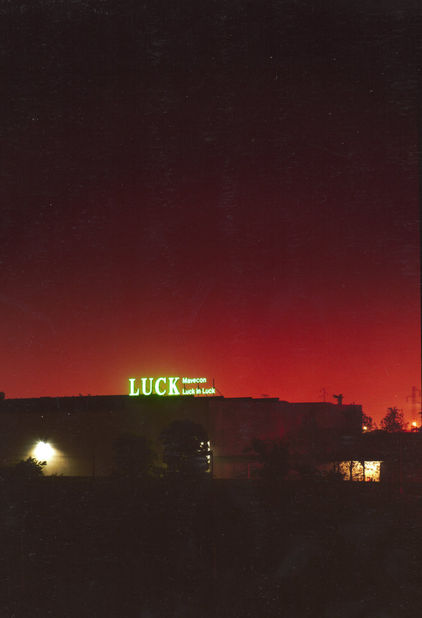
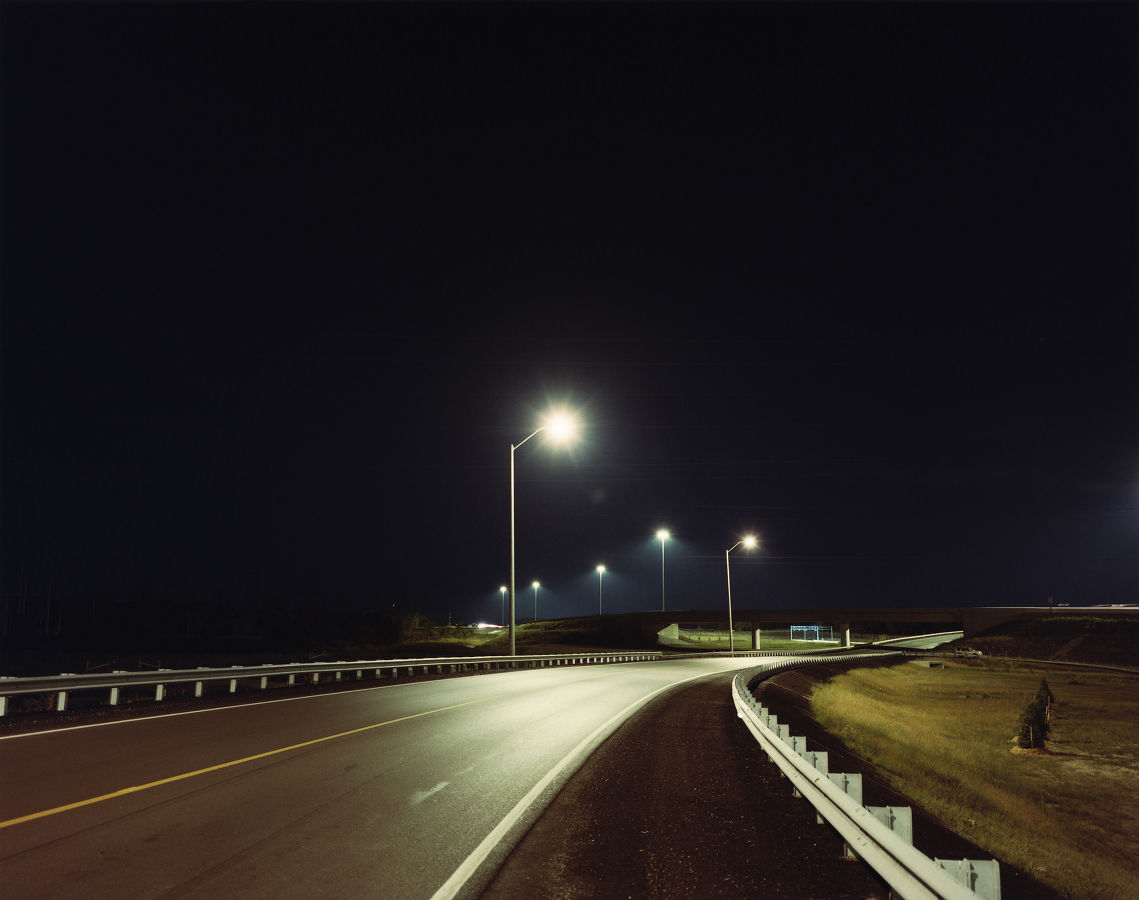
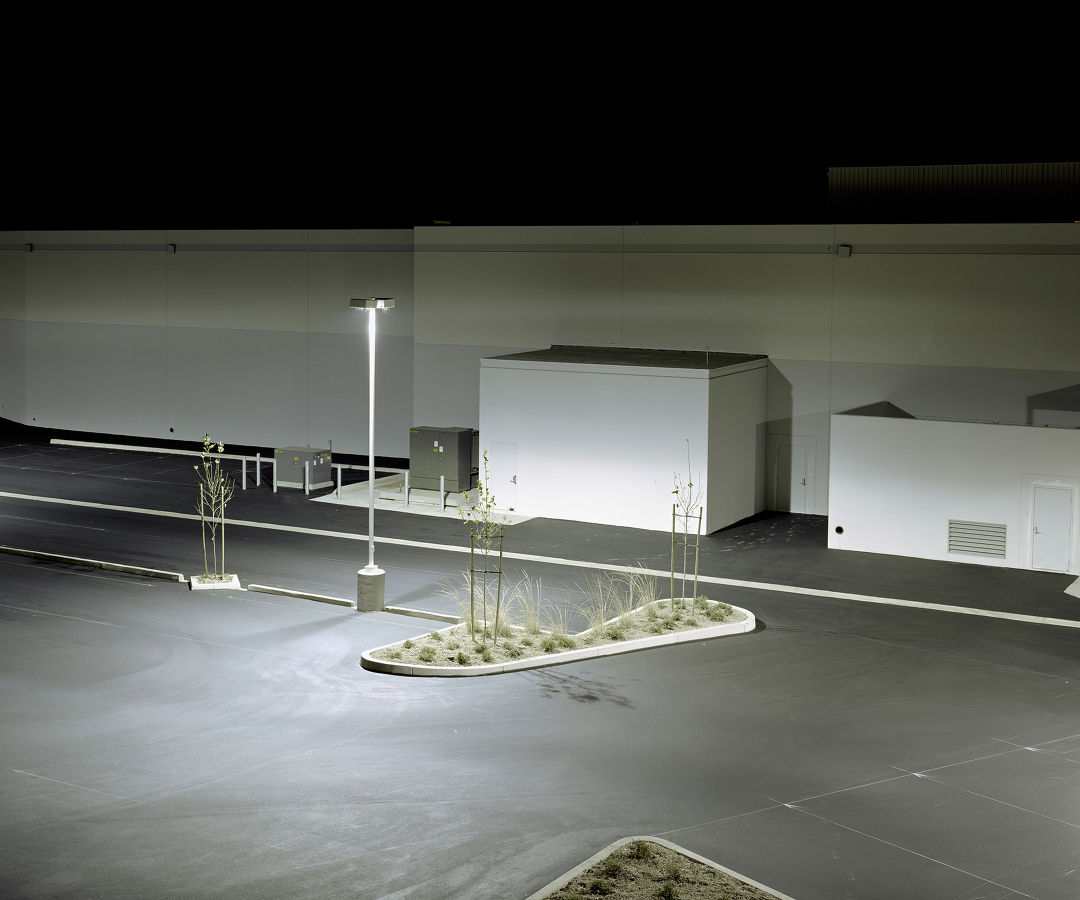
Another artist highlighted by Cotton is Dan Holdsworth, who: “has photographed transitional architectural spaces and remote landscapes. Often termed ‘liminal spaces’, these areas exist where cracks in institutional or commercial definitions appear, and our sense of place is dislocated” (Cotton 2016, p94). As one of the alternate titles of my project is ‘liminality’ this definitely seemed to be worth investigating.
Again, I found that I thoroughly enjoyed the deadpan style here.
Notes
Baltz, L. (1992). Corso dei Lavoro 1002 [online]. Available at http://www.galeriezander.com/en/artist/lewis_baltz/works (accessed April 21 2018)
Cotton, C. (2016). The Photograph as Contemporary Art. 3rd ed., London: Thames & Hudson Ltd.
Holdsworth, D. (1996-8). Autopia 02 [online]. Available at http://www.danholdsworth.com/works/ (accessed 21 April 2018)
Holdsworth, D. (2004). California 02 [online]. Available at http://www.danholdsworth.com/works/ (accessed 21 April 2018)
Week Five
A particular passage in Stuart Franklin’s The Documentary Impulse caught my eye this week, when speaking about Robert Frank’s The Americans: “the book is without doubt the twentieth-century photography’s purest expression of existentialism” (Franklin 2016, p159). This got me thinking back to my long-ago days of undergrad philosophy lectures, and Jean-Paul Sartre’s assertion that “the defining feature of the imagination lies in the ability of the human mind to imagine what is not the case” (Thody and Read, 1999, p29). Although the concept of freedom that I am exploring through the idea of borders is a limited and specific one compared to Sartre’s much more complex philosophical modes, it may still be possible to explore the idea of freedom and borders through encouraging the viewer to imagine how the world might be were such borders not in place.
Franklin goes on to discuss the sorts of freedom that Frank’s work epitomises: “freedom in the choice of subject, the freedom of unfettered time and space and the freedom of the open road” (Franklin 2016, p160). One of the areas upon which I intend to concentrate over the coming weeks is the border between the tightly packed city and the boundless desert, and how this boundary is slowly creeping outwards as the city itself expands, with trips intended both through the desert and to look at some of the new planned communities being built on the boundaries between the two.
Notes
Franklin, S. (2016). The Documentary Impulse. 1st Edition. New York: Phaidon.
Thody, P and Read, H. Introducing Sartre. 2nd ed., Cambridge: Icon Books.
Week Six
After a trip out to the further reaches of the UAE to visit the border fence with Oman and the Tropic of Cancer, I got thinking about mankind’s relationship with the landscape and how this varies from culture to culture.
In terms of culture, the Emirati one is relatively young. The initial tribal settlements of the UAE which led to the modern cities therein do not date back much further than the nineteenth century. Most Emiratis still feel very connected to the land – the wealthier families will have a villa in one of the cities and their ‘farm’ – a dwelling further out in the desert. However, it has become a sad fact of the modern-day UAE that the unadopted parts of the desert are not treated well, by Emiratis and expats alike. Camping in the desert is a popular weekend activity in the cooler months. However, only a very small percentage of the campers feel it incumbent on them to take their litter away with them.
The original inhabitants of the Arabian peninsula were the nomadic bedouin. Many bedouin remain, across the UAE, Oman, Saudi Arabia and beyond. It is these people that the imposition of political borders has perhaps harmed the most in this part of the world. In the essay ‘Return From Exile’ included in the book The Land, edited by Bill Brandt, Keith Critchlow states “Nowhere in recent time has there been a better example of the total integration of humanity with the natural landscape than in America amongst those people known as the Red Indians” (Critchlow, 1976). Respectfully, I would argue that the Bedouin could also lay claim to that, having lived for centuries in the harshest of conditions by adopting a lifestyle harmonious with their environment. Much like the indigenous Americans, the Bedouin lifestyle has suffered enormously by the imposition of western values. The drawing up of borders across the peninsula, and the subsequent increase in physicality of those borders has meant that many bedouin are no longer able to follow their traditional routes as dictated by the seasons. Furthermore, most bedouin are stateless people, lacking passports or any other paperwork that might grant them freedom of movement across the land on which they have lived for centuries.
This was my first thought on encountering the physical fence that has relatively recently grown along the border between the UAE and Oman. Ostensibly to prevent smuggling, it seems an unnecessarily heavy-handed response and one that can only have a negative effect of those that dwell in the region. A good example of where something that was to me, until this point, theoretical, becomes all too real.
Notes
Critchlow, K. (1976). Return From Exile. In: B. Brandt, ed,. The Land, 1st ed. New York: Da Capo, p29
Week Seven
Thresholds. Whilst thinking about more common-day borders, I looked back at some of the ideas raised by the comparative mythologist Joseph Campbell, whose work has, over the years, given me a much deeper understanding of many facets of life. In The Power of Myth, Campbell speaks of the experience of visiting a sacred space:
“I walk off Fifty-first Street and Fifth Avenue into St. Patrick’s Cathedral. I’ve left a very busy city and one of the most economically inspired cities on the planet. I walk into that cathedral, and everything around me speaks of spiritual mysteries. The mystery of the cross, what’s that all about there? The stained glass windows, which bring another atmosphere in. My consciousness has been brought up onto another level altogether, and I am on a different platform. And then I walk out, and I’m back on the level of the street again”. (Campbell 1991 p19)
This lead me to think about how there can be borders of consciousness (though perhaps to a lesser degree) within our everyday lives. I identified the ‘learning environment’ border and the border between genders in a doctor’s waiting room, along with the carefully planned and orchestrated border that leads into a shopping mall – perhaps the closest we come to one of the great medieval cathedrals in this day and age.
Notes
Campbell, J. (1991).The Power of Myth. New York: Anchor
Week Eight
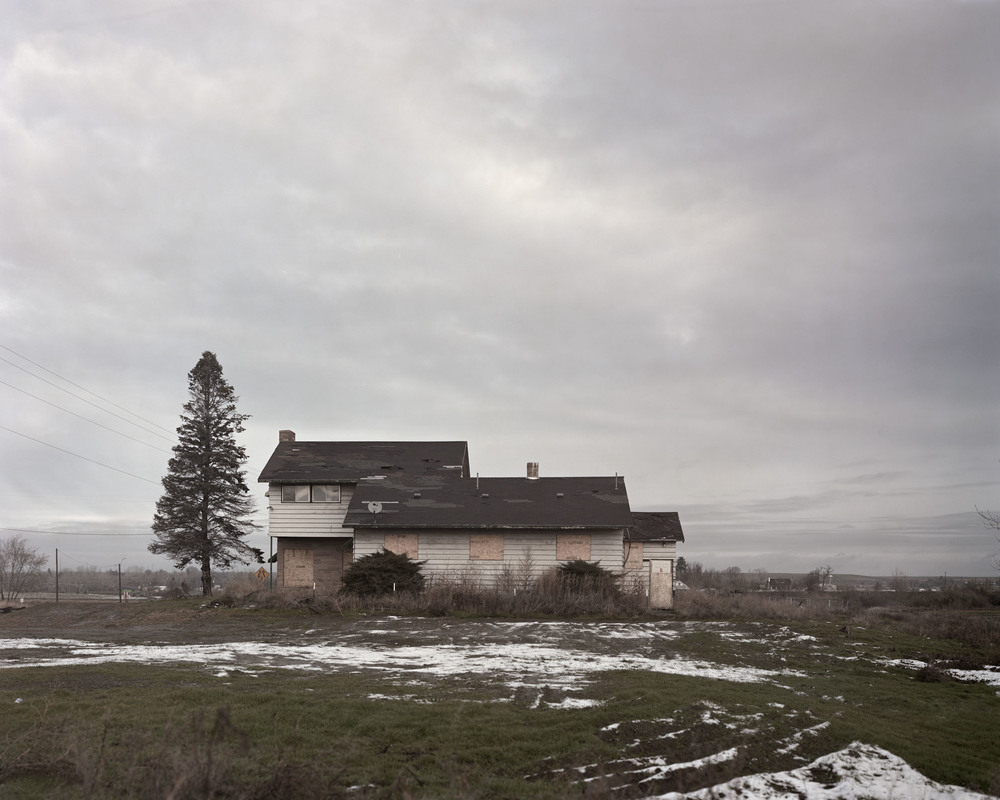
Looking through notes from previous units I was reminded of the work of Jack Latham; in particular his book A Pink Flamingo, which I bought following his conference. Again, beautiful, deadpan images of the edges of society – in this case in Oregon.

Notes
Latham, J (?). A Pink Flamingo. ?:Dive Bar Books.
Week Nine
Reading Douglas Coupland (probably, at a push, my favourite author and the inspiration for where I envision my final project going) I found his comments on Ed Ruscha (another favourite): “was he shooting out ropes and tethers to bind LA and the ahistorical west to the supercontinent of cultural history?” (Coupland 2013, p18)
I am not entirely sure why this connection between two of my favourite artists thrilled me, or whether or not I could be considered to be trying to do something similar regarding the United Arab Emirates, in which case, is this project more of a historical document than what I envisioned as a deadpan look at the nature of borders.
Notes
Coupland, D. (2013). Shopping in Jail. Berlin: Sternberg Press.
Week Ten
Since that last entry, I have taken the decision to broaden the scope of my investigation beyond just the UAE. Thus, I have more of an idea that I am looking at a deadpan investigation into borders, which should help with my final selection of photographs.
One idea is to follow the precedent that Margaret Iversen observes when she speaks of “Duchamp’s important Three Standard Stoppages of 1913-14…Like Twentysix Gasoline Stations, the title of Duchamp’s work has the same random specificity of a number followed by a qualifier and plural noun” (Iversen 2010, p16). Thus Sixteen Different Borders?
In terms of the overall project and how this project will form a part of it, the move away from the UAE means that my initial idea may not work. Still persevering with the idea of a book with accompanying text, I looked at The Land, edited by Bill Brandt which is wonderful, but more non-fiction oriented that I would hope for my own project.
Further research brought up the names Wright Morris, Edward Agee and WG Sebald. I have managed to get copies of Sebald’s The Emigrants and Morris’s The Home Place for Kindle and have ordered copies of Morris’s God’s Country and My People and Agee’s Let Us Now Praise Famous Men to be delivered to my UK address for my return in July. I am hoping that these will represent an important and exciting way forward for me!
Notes
Iversen, M. (2010) Automaticity: Ruscha and Performative Photography. In: D. Costello and M. Iversen, ed., Photography After Conceptual Art, 1st ed. Chichester: Wiley-Blackwell (pp13-27)
Week 1: I eased back into my studies with a combination of relief and fear – relief that everything was still there having been traveling for much of the first unit and fear – the common feeling of impostor syndrome – what am I doing? How long will it take them to realise I don’t belong here?
The overview of this unit makes me think that I am about to be firmly thrown from my own comfort zone – apart from 18 ill-advised months working in an advertising agency some two decades ago, I haven’t ever been in a situation where I am selling myself in this way. Scary times ahead!
The feedback from this week’s first activity has confirmed that I have chosen a subject that I think will work – the lesser seen side of the UAE, particularly in terms of how different cultures exist and impose themselves upon the physical infrastructure of the country.
The second activity was a familiar one, having run through many of the exercises (this one included) a few years back. I really would have liked to have given more time and effort to this exercise (and it is, indeed, one I intend to revisit at a later juncture) but early-term busyness and the ensuing post-work exhaustion effectively curtailed that idea. As it was I managed to get snapshots from whatever I was doing, though somewhat less than inspired.
In terms of the course materials; I found the delineation between the different types of photographer interesting, though I think I need more time (and learning!) to work out where, if anywhere, I fit on that model. As it is, I am most interested in travel and fine art photography. I need to find out in more detail how these might work as commercial practices, particularly here in the Middle East. However, in terms of the non-photographer jobs in photography, I feel I might be a little to old to start over as a photographer’s assistant. However, having a teaching qualification and having been a teacher for very close to twenty years now, well there may be something in that…
Next steps:
Week 2: This is SCARY. I am not a businessman. I cannot promote myself – in fact the one thing at which I excel is self-deprecation. And I’m not very good at that. Looking at the other work posted on the seven shots in seven days assignment really amps up the whole impostor syndrome thing. Oh well, it’s paid for now, so may as well make the best of it.
Current research/favourites are Jason Lee (he of My Name Is Earl and Mallrats fame), Edouard Sepulchre (who has the best name I have ever heard) and Scott Behr (whose work nearly always blows me away when it appears on my Instagram feed) – very much three of a similar kind: wide open spaces of Midwest America shot on film. A pale, low-contrast look very different from the high-contrast look I always thought I preferred. Have been experimenting in Lightroom to see if it is possible to use a similar aesthetic on my shots of Dubai – I think the desert atmosphere and faded buildings would lend itself very much here. Particularly areas like Al Sufouh and Jebel Ali where local life carries on unhurriedly far from the eyes (though actually not physically that far, I suppose) of the tourists and business visitors. Equally, bandwagon jumper I may be, it has cemented a desire to experiment with film. I have an old Olympus OM2 somewhere, and a Yashica Electro. And then there is my dad’s Bronica medium format mouldering away at home – perhaps a project for the Christmas holiday…
Week 3: Developing my love of Americana photography, which I suppose stems back to early-ish exposure to Walker Evans and William Eggleston, I have been really impressed this week with the photography of Stephanie Moshammer: incredibly brave. The sort of photographs I would love to but never dare to take. I would like to add more (candid?) portraiture to my work – I seem to be able to do this no problem when I travel (I think the shots I am most pleased of in all my work are the portraits from Sudan and Iran and Bangladesh) yet can’t seem to do it at home (either Dubai or the UK). Though I managed some fairly pleasing shots on the Iftar photowalk back in June.
The viral photography challenge also started some sort of flame in me – a reminder of those long-gone university days when we would try and create what we fondly imagined to be Dadaist-influenced art and then set about attempting to provoke a controversy in the letters pages of the university newspaper. How innocent those pre-digital days now seem. It has led me back to wondering about the stuff we used to read back then and whether or not it might, as part of my own personal cultural background, be able to provide some interesting ideas. I have ordered copies of the three Rapid Eye books to revisit old times, and started reading about Genesis P-Orridge and his doings. It doesn’t seem immediately useful, other than the fact that it has awoken a degree of creativity by simple connection back to the days when I thought everything I did was fresh and exciting. Though that may not have been the case, there was indubitably a creative freedom brought about by not knowing the rules.
Week 4: I finally got round to looking at Olivia Arthur’s Dubai-based work Stranger. I think I put it off for so long because I was afraid it might discourage me. And, boy, was I right. Initially at least. Incredibly powerful and with a vision I could never hope to approach. After my initial response, however, repeated exposure led to a sense of exhilaration – this series of photographs transformed a place that I have lived in for close to a decade into something magical and, to my eyes, fresh. Yes, I can’t hope to match that vision, but it showed what is possible. I am, however, starting to doubt my pretensions towards fine art photography. In all honesty I don’t think I have either the imagination, the understanding or the technical skills. Perhaps, instead, as the genre still delights and challenges me, this could be something I look to grow into?
Week 5: The networking assignment was terrifying but brilliant – a totally new idea (to me) about co-authorship and collaboration. I have previously avoided trying to photograph and talk to people, partly because I’m a miserable goth (and very shy) and partly because since Brandon Stanton’s seminal Humans of New York, the idea has become well worn, to say the least (though to me, like to most people, HONY was a revelation) But to get someone to tell about their neighbourhood and then take the photographs (and of the neighbourhood, rather than of them) afterwards was brilliant. I know the Al Sufouh neighbourhood relatively well as it is just across the Sheikh Zayed Road from where I live and has numerous opportunities for views of traditional Emirati city-based life. But this was a new view. Highly enjoyable and very stimulating. This is something I will try again and again, though perhaps not with complete strangers so much…
Week 6: Although there was no ‘homework’ this week, in following my ideas about a psychogeographical project, I acquired a copy of Urbis: A Language of Urban Fabric by Aleksandar Janicijevic (1). Although the photography was very interesting, and the chapter headings helped, the book (which I believe to be self-published) is difficult to make sense of – some sort of forward or artist’s statement would indubitably have helped. This could, of course, be my own relative inexperience with photographic texts, but it is still something I shall have to assiduously guard against in my own work – it needs to be clear what I am trying to show and what I am trying to do.
Week 7: As what I thought of as being a psychogeographical approach to Dubai was not working, I started reading more about psychogeography and its background to see if I might broaden my ideas. Once I got started on the Letterist and Situationist Internationals I was swept away. Who would have thought that a 50 year old somewhat-esoteric art movement (albeit one that helped precipitate the 1969 Paris riots) would not only still be relevant today, but would actually be considerably more relevant that when it was initially thought up?
Guy Debord, the helmsman of the movement, wrote of the society of the spectacle – a society where the representation of a thing or experience was more important than the thing or experience itself. It doesn’t matter what you do, only what you are seen to do. “The spectacle is not a collection of images; it is a social relation between people that is mediated by images” (2). The fact that this was written in 1967, 40 years before the first iPhone, 43 years before anyone had even heard of Instagram, and 17 years even before Mark was even a twinkle in Mr. and Mrs’ Zuckerberg’s eyes is just incredible. Though I am not sure where this will fit in with my project. Or even whether it might not be another project in itself – certainly the ideas it raises are setting off all sorts of fireworks in the part of my brain that badly wants to write a novel (yet has only so far managed to write a novel badly).
One promising new idea is from another text about the Situationists, which expounded the idea that, psychogeographically speaking, cities are divided into three zones – one for work, one for rest and one for leisure. Debord introduced the idea of the derive – an apparently aimless walk through city streets. “the derive cuts across the division of the space of the city into work, rest and leisure zones. By wandering about in the space of the city according to their own sense of time, those undertaking a derive find other uses for space” (3). The derive is not a new idea to me, having indulged (and indulged is indeed the word) in the practice in my pre-photographic days living in London, and also having used it as an idea for photography in the first unit of this course. However, extending the theoretical background gives me something to aim at rather than just taking photographs every twenty paces, or whatever (though I really loved that exercise!). I had already been looking at how different cultures utilise public space in Dubai (Indians playing cricket on empty lots; the street-based public Iftars during Ramadan; impromptu public firework displays for Diwali) and this, I think, will be an ongoing project, albeit one which will take more time to complete.
New ideas: an Iain Sinclair-esque walk the length of Dubai, from the Sharjah border at Al Mamzar park to the Abu Dhabi border at Ghantoot. The last part of this could cause problems with there being no walkable roads, but it is something that interests me greatly. The downside is that there is not enough time for this in this unit. Still, it is something I will do, even if just to satisfy myself. Another idea from the Situationists – work out the directions from my former flat in London to various famous landmarks (e.g first right, straight for 1 km then next right) then take a series of photographs of these landmarks only following the instructions from my flat in Dubai. This is also something I intend to do, even if just for personal, playful purposes.
Although my previous ideas for my project seem to have come to little (though some of the shots I will use in the ongoing public space project), this week has been an absolutely exhilarating tumble of new ideas.
Week 8: I am much more comfortable now I have decided to concentrate (for the time being, at least) on travel and documentary photography. I think my work from Bangladesh and Sudan is pretty strong and I got some good shots in Cuba (though I still feel that Cuba, like Iceland, is almost impossible to shoot badly but also very hard to shoot with a degree of originality). This also makes the one main worry – choice of market/end placement for my photography – much more straightforward. Whereas I was getting concerned that the fact that there is only a handful of galleries (two at the last count) in Dubai, and that they would be much more likely to go for proper fine art photographers, I am much more at home with the idea of travel photography, as it is that that I mostly consume. And my dad is a travel journalist who, through magazine articles, also sells travel photography, so he knows something of how and who to approach.
Following Paul’s tutorial recommendations from a couple of weeks back, I’ve been enjoying the work of Ben Quinton whose beautiful, ethereal personal shots are just incredible, and Ben Roberts – finally, although these guys’ talent is immense, I feel I am in an arena where at least I understand the rules. They also bring up the idea of shooting on assignment in the travel/documentary sphere – something far more attractive to me than shooting for clients (even though in most ways it amounts to the same thing – the power of language!) and this is a pathway that would very much interest me. I particularly enjoyed Ben Roberts’ work about private and public space in the Occupy movement (as that very much is in line with my own interest about how space is used and the difference between the spheres – see last week’s journal entry) and I loved the idea of presenting travel work as observations. This will certainly help me re-evaluate what I have done so far, not only on this course but also in my past years of photography and travelling. I really feel inspired!
Week 9: Too busy out photographing (and preparing for an upcoming school inspection) to do much reading around the subject this week. Now that the project is UAE-based, I’ll read some Nabati poetry (particularly that of Sheikh Mohammed, whose poetry is indeed very good and is a backbone for contemporary Emirati culture) when I get a moment (it would be lovely to link some of this to specific images and this is something well worth pursuing – perhaps not before the 15th December deadline. Another one for the future!) The further struggle of this will, of course (as I currently keep telling my Y12 students) that it is very difficult to keep the true sense of poem when it is translated into another language. And this is particularly so when the translator chooses to keep a rhyme scheme (just compare the Allen Mandelbaum translation of the Divine Comedy to the Mark Musa, for example). I digress…
Week 10: Another inspiring week – although I fear I am far from being good enough to display in a gallery or publish in a book, the material this week gave me some impetus to become that good. I was inspired to haul out a book that I had almost forgotten, even though it is by my (probably) favourite author: City of Glass: Douglas Coupland’s Vancouver (4). This is an incredible (I think that back when I first read it I was less photographically aware) fusion of photography, creative writing, graphic design, memoir, non-fiction – you name it. Although I looooove Coupland, I had not really picked up this book since I first acquired it about 5 years ago. I don’t know whether it had lodged subconsciously or whether it is just a happy accident, but at a time when I was looking for a home for my photography, I found that this was exactly the sort of thing I want to produce. Of course, Coupland is a bona fide, voice-of-a-generation genius and I am a middle-aged English teacher, but I know precisely where I want to aim now.
Notes
1. Janicijevik, Aleksandar. Urbis: A Language of Urban Fabric: self published, 2012
2. Debord, Guy. The Society of the Spectacle (Kindle version): Bureau of Public Secrets, 2014.
3. Wark, McKenzie. The Beach Beneath the Street: The Everyday Life and Glorious Times of the Situationist International, New York: Verso, 2015.
4. Coupland, Douglas. City of Glass: Douglas Coupland’s Vancouver; Revised Edition: British Columbia: Douglas & MacIntyre, 2013.
 Daniel Simon Photography